US-China split in strategic industries set to deepen as governments drive decoupling: Muzinich CEO
[SINGAPORE] The US and China will likely become increasingly divided in strategic industries – such as artificial intelligence and rare earths – amid rising geopolitical tensions, said Justin Muzinich, CEO of private-debt specialist Muzinich.
As the two superpowers increasingly regard each other as strategic rivals, it is “rational” for both countries to want to separate when it comes to strategic dependencies going forward, he noted.
“The way I see the fault lines dividing is there will be a difference between strategic industries and non-strategic industries,” Muzinich said on Tuesday (Nov 17).
His comments come as the US announced new export controls on advanced AI semiconductors to overseas data centres, following reports of these chips being illegally diverted to China through other countries, including Singapore.
Muzinich was speaking on a panel on investing in a fragmented world at the HSBC Singapore Wealth Investment Summit 2026. With him was George Yeo, former Singapore foreign minister and visiting scholar at the Lee Kuan Yew School of Public Policy, National University of Singapore.
The session was moderated by Barry O’Byrne, HSBC’s CEO of international wealth and premier banking.
Muzinich said both the US and China would prefer not to depend on each other for strategic industries, although this will not be the case for non-strategic sectors such as clothing exports.
In a separate interview with The Business Times, Muzinich expects “still a lot of room for cooperation” in areas that are not considered as strategic, as both countries have an interest in sourcing the cheapest goods.
Meanwhile, the new export controls – which prevents China from renting capacity in third-party countries – were a foreseeable and “totally logical consequence” of the initial goal of preventing exports, he said.
SEE ALSO
“If you’re going to prevent the exports, you will probably also prevent circumventing those rules by allowing countries just to rent the space in third-party countries,” he added.
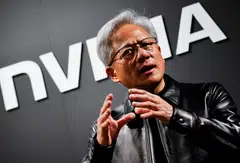
But while the US seemed determined to ban China’s access to Nvidia chips with the new export controls, Yeo does not expect this will restrict China. He said: “It’s clear that China’s AI development cannot be stopped.”
Muzinich said in the panel that, to separate strategic industries, the government will have to step in to force it from the top down.
“Companies ultimately care about the bottom line,” he pointed out. “The country should be willing to pay a cost, for instance, for having secure supply chains in strategic industries; private companies aren’t going to do that on their own.”
AI infrastructure could slow
Separately, Muzinich warned that spending on AI infrastructure will fall in the longer term, especially since the world is spending “so much” on AI investments currently.
“There’s at least a decent probability that we’re in some sort of earnings bubble,” he said. “At some point, we’re going to have enough data centres for whatever AI people want to do, and we’re not going to need more, and revenue from all that will fall.”
He also expressed concern over mounting sovereign debt, especially in the US.
He said the US debt and deficit situation is “not sustainable”, with the US government unlikely to allow significant inflation, reduce spending or increase tax.
This could lead to a world where sovereigns are not considered the safest investments in the world in the next 10 years, with government yields surpassing corporate debt.
In the separate interview, Muzinich noted that corporate risk is not totally divorced from the government because governments can also influence corporates.
Nevertheless, he said the world is moving towards a time when there are lower risks to owning a portfolio of diversified companies – where decision-makers are rational and motivated by numbers – compared with governments, where debt is high, and decision-making may be driven by extreme politics.
He cited the example of Italy in 2012 to 2013, where corporates were doing well even amid sovereign risks.
“Markets can be pretty rational,” he said. “You’d much rather give money to corporates that have low debt levels.”
Additional reporting by Jean Low