


UAE exit blindsides Opec and threatens to shake its grip on oil
The departure of one of the group’s most influential members will still raise wider questions
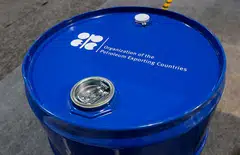
[DUBAI] The shock decision by the United Arab Emirates to quit Opec blindsided its partners of six decades. Now the cartel will have to fight to stay relevant in a fast-shifting global oil market.
Officials from other member countries were left stunned on Tuesday (Apr 28), as longstanding tensions between Abu Dhabi and the group’s de facto leader Saudi Arabia culminated in the sudden announcement that Opec’s third-largest producer will exit in a matter of days.
For Opec and its partners, the departure will dilute their ability to manage oil prices by adjusting supply, while positioning the UAE as a wild-card player – and one that has long chafed against the constraints imposed by Opec quotas – at a time of unprecedented upheaval in the global market.
Most immediately, production from the UAE and its Gulf neighbours is being throttled by the closure of the Strait of Hormuz, leaving the rest of the world desperate for supplies and rendering Opec quotas meaningless. But once the oil starts flowing again, the UAE’s departure threatens to eventually set the stage for a renewed rush for market share and future price wars. Already, officials have signalled their intention to boost production.
Several officials at other Opec+ members said that they did not expect a wider exodus to immediately follow the UAE.
But the departure of one of the group’s most influential members will still raise wider questions. Opec’s power has been eroded in recent years as new production flooded the market, particularly from US shale. Saudi Arabia, which has styled itself as the steward of the global market, has struggled to rein in overproducing members, while the group has already seen a trickle of smaller members leaving over the past decade.
Navigate Asia in
a new global order
Get the insights delivered to your inbox.
“Opec’s market power will diminish,” said Greg Brew, an analyst at consultants Eurasia Group. “The UAE’s departure will undermine the group’s credibility, as the emirates represented a significant portion of overall Opec capacity.”
This account is based on conversations with about a dozen sources familiar with the matter, most of whom asked not to be identified, discussing private information.
The UAE’s decision to exit Opec was years in the making, some of the sources said, stretching back to the start of the decade, when the upheaval from the Covid-19 pandemic helped drive fault lines over oil policy between longtime allies Abu Dhabi and Riyadh.
Those strains reflected a clash of visions: between the UAE’s ambitions to make use of its hydrocarbon riches before the energy transition hits a tipping point, and Riyadh’s preference to carefully manage crude production and prices. It runs in parallel to their competition for the role of Middle East business capital, and to project political influence across the region.
The UAE’s position was shaped by a powerful figure in the emirate: Sultan Al Jaber, CEO of Abu Dhabi National Oil Company, who often chafed against the constraints imposed by Opec+ quotas.
Having invested billions in new production capacity, the UAE was eager to recoup its expenditures and bolstered output in excess of its stipulated limit – earning a rare public rebuke from Saudi Arabia. Abu Dhabi floated the prospect of quitting the alliance, but never followed through.
The UAE’s preparation for a departure gathered pace around the end of last year. What finally brought a tipping point was the war in Iran, Energy Minister Suhail Al Mazrouei said.
The effective closure of the Strait of Hormuz, the waterway connecting the Persian Gulf with international markets, forced producers in the area – the Saudis, the UAE, Iraq and Kuwait – to shut in at least 10 million barrels a day, or 10 per cent of world supplies, according to the International Energy Agency (IEA).
With production constrained, the shutdown meant the UAE’s exit from Opec+ would be less disruptive, Mazrouei said. And by leaving, the country will be able to meet the rebound in fuel consumption after the war, unfettered by Opec+ production quotas.
“If oil producing capacity is leaving the cartel’s influence, that’s bearish” over a three-to-five-year timeframe, said Clayton Seigle, a senior fellow at the Center for Strategic and International Studies. “It does not mean that Opec+ cannot succeed in managing the market, but the obvious fear we all have to imagine is a domino effect, and other coalition members follow Abu Dhabi out the door. That’s the number one question in my mind.”
Opec’s importance resides in its readiness to balance oil markets, particularly by cutting production when consumption slumps, such as during the financial crisis in 2008 and the Covid-19 pandemic in 2020.
Now, responsibility for balancing supply with demand in the future will fall on an ever-dwindling circle of nations in the Opec+ alliance, led by Saudi Arabia and Russia. While Riyadh has shouldered the burden of future supply adjustments, the next-biggest nations in the coalition, such as Iraq, Kazakhstan and Russia, have shown far less reliable commitment than the kingdom’s.
Saudi Arabia has signalled frustration with its own loss of market share, as some alliance partners joined other suppliers around the world in pumping more and more oil. Last year, the kingdom led the Opec+ alliance in a dramatic strategy shift to boost supply, abandoning its longstanding strategy of supporting prices.
Still, while Abu Dhabi has rapidly expanded capacity and has ambitions to boost supply, it’s not clear how much further room it has to pump more. Estimates of UAE production vary significantly, but many analysts and traders believe that, before the war, it was already pumping near maximum levels. The country produced 3.64 million barrels a day in February, far above official numbers, according to the IEA. Several traders believe the real figure was even higher.
“UAE production was at capacity for a long, long time – they ignored Opec+ quotas,” said Gary Ross, a veteran oil consultant turned hedge fund manager at Black Gold Investors. “Effectively, it’s Saudi Arabia that balances the market. At the end of the day’s that’s what Opec is: Saudi Arabia.”
And its departure does not appear to present an imminent breakdown of the coalition. Several delegates in the alliance, which spans both Opec+ members and other countries such as Russia and Kazakhstan, said they neither plan to follow the UAE out the door, nor see its departure triggering a wider exodus.
The real test of Opec’s remaining potency will come the next time it’s compelled to intervene. The fallout from the Iran war will mean that the market needs all the oil it can get for some time to come, even after the Strait of Hormuz reopens.
“What’s less clear is when we will have oversupply again and the need for supply control,” said Bob McNally, president of Rapidan Energy Group and a former White House official. “It could be many years from now.” BLOOMBERG
Decoding Asia newsletter: your guide to navigating Asia in a new global order. Sign up here to get Decoding Asia newsletter. Delivered to your inbox. Free.
