


Schneider Electric spends S$25 million to automate Tuas logistics hub, reskill workers
[SINGAPORE] Schneider Electric is spending S$25 million to upgrade the automation and digital capabilities of its Hub Asia logistics distribution centre in Tuas, as part of the French multinational’s ongoing transformation of its operations in Singapore.
Scheduled to be completed by 2027, the upgrades will bring automation, robotics and agentic artificial intelligence to the distribution centre, Schneider said in a press statement on Thursday (Sep 17).
A key part of the upgrade is a goods-to-person system, where inventory is delivered automatically to picking stations instead of workers having to retrieve the goods themselves.
The first phase, which focused on simplifying workflows and automation, went live in June and improved productivity by about 10 per cent.
It involves the storage and retrieval of loose items using autonomous robots, vehicles and a conveyor system.
An upgraded warehouse management system oversees operations at the facility and uses machine learning to forecast inventory.
The second phase will focus on further improving the facility’s automation and digital capabilities. This includes extending the automated system from loose-item picking to full-carton picking, as well as introducing adaptable racking systems that allow for scalability and layout redesign.
When fully deployed, Schneider expects the system to handle around 40 per cent of outbound goods and raise productivity by up to 20 per cent.
Schneider opened the current 21,000 square metre Hub Asia logistics distribution centre near Tuas Port in November 2022, replacing an earlier facility in Penjuru. It said then that it would invest S$110 million over 10 years to expand its logistics capacity and technologies in Singapore.
SEE ALSO
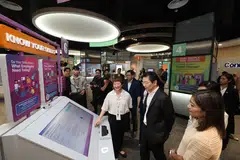
The S$25 million upgrade, which covers both phases of the project, is supported by the Singapore Economic Development Board.
Changing jobs, not eliminating them
Of the S$25 million, S$19 million will go towards workforce development through 2030.
Schneider plans to develop a team of 26 workers, to operate and manage the facility’s new automated systems, comprising both new hires and existing employees who are being reskilled.
The company said existing employees will receive additional training in areas such as advanced systems monitoring, data analysis and warehouse planning.
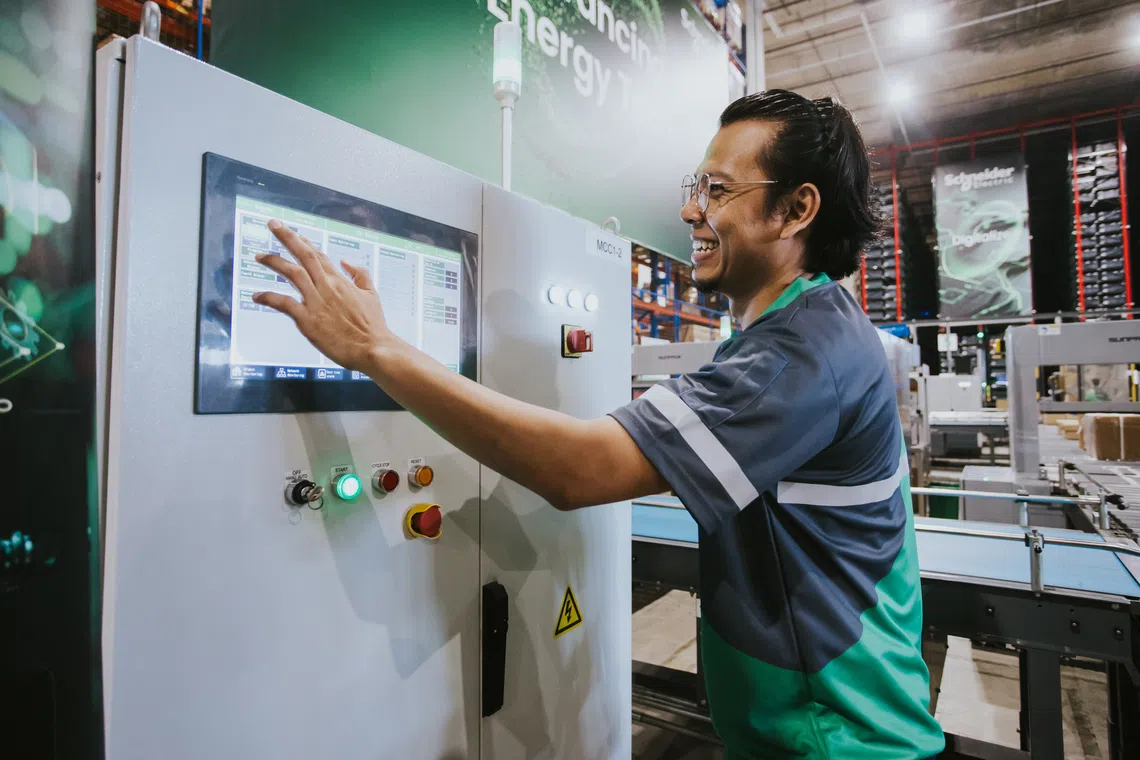
Pradeep Singh, Schneider’s vice-president for planning and logistics in East Asia, told members of the media during a tour of the facility ahead of Thursday’s announcement that some pickers and material movers have already been upskilled to programme the automated systems and troubleshoot problems when they arise.
For workers who are unable to acquire the skills needed for the new operations, Schneider will seek to move them into other roles that match their existing skills, he added.
Singh stressed, however, that automating the distribution centre is not intended to create a fully unmanned warehouse.
Citing double-digit growth in volumes driven by data-centre customers, he said Schneider would still need workers to support this growth even as more processes are automated.
Workers will also be needed to monitor automated operations and step in when problems arise. While certain areas could become fully automated, others would continue to require human intervention and judgment, he said.
The type of work they perform, however, is expected to change.
“We also want to upskill our resources to make sure that they have the right capabilities… to manage these smart operations in the future,” Singh said.
The transformation has already created roles that were previously not needed in its warehouse operations, such as automation engineers, while more data scientists are being brought into the team.
Manish Pant, Schneider’s executive vice-president for international operations, said Singapore provides not only the infrastructure to “build this kind of operation in a way few other locations can”, but also the talent to do so.
“The strongest logistics operations today go beyond speed,” he said. “They pair AI with human judgment, letting the technology take on the volume so our people can focus on the decisions that need experience.”
