


‘Full of confidence’ in South-east Asia: Cosco Shipping eyes investments in Malaysia, Vietnam and Indonesia to power growth
The logistics player bets on regional presence amid manufacturing growth and Chinese trade flows
[SINGAPORE] Mainboard-listed Cosco Shipping International (Singapore) is looking to South-east Asia for growth, betting that rising manufacturing activity and more complex supply chains will lift demand for logistics services across the region.
The logistics service provider plans to invest further in Malaysia, Indonesia and Vietnam over the next three to five years, while expanding its logistics infrastructure in Singapore, president Jiang Kai told The Business Times in Mandarin.
“We are full of confidence in the South-east Asian market,” he said.
Currently, all of the company’s consolidated revenue is derived from its presence in Singapore and Malaysia – with about 87 per cent from its operations in the city-state.
But it also holds interests in logistics businesses in Indonesia and Vietnam, as well as a stake in a dry-bulk shipping associate operating across the region. These associated companies contributed about a quarter of the group’s profit before tax in its latest results for the first half of 2026.
Despite global trade having had a tumultuous few years – with US tariffs and geopolitical conflicts in Ukraine and Iran disrupting shipping routes and supply chains – manufacturing activity remains robust in South-east Asia, Jiang said.
He also sees a recovery in South-east Asia’s dry-bulk shipping market, which carries industrial inputs such as coal and iron ore, as manufacturing activity strengthens.
Demand for specialised cargo shipping for industrial machinery, automobiles and new energy equipment has also risen as the region continues to develop.
“The growth in South-east Asia’s shipping industry has similarly generated a stable increase in logistics demand,” he noted.
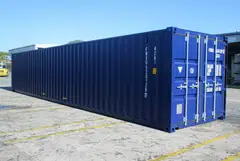
For Cosco Shipping International (Singapore), its integrated logistics business made up about 85 per cent of group revenue in the 2025 financial year.
It has smaller interests in other shipping services, including ship repair and marine engineering, dry-bulk shipping and property management.
The company is the Singapore-based arm of the wider Cosco Shipping group, a Chinese state-owned shipping and logistics conglomerate.
Its core business runs through its subsidiary Cogent Holdings, which provides warehousing, container depot, automotive logistics and transport services in Singapore and Malaysia.
Shifts in the region’s economic development are also transforming the needs of customers.
“Some Chinese manufacturing companies, when expanding into overseas markets, prioritise South-east Asia as a manufacturing base. This is a long-term positive for us.”
Jiang Kai, president of Cosco Shipping International (Singapore)
Jiang explained that manufacturers increasingly prefer logistics providers that can offer end-to-end solutions throughout their supply chains, while offering greater visibility and reliability.
For example, a manufacturer seeking local warehousing or trucking services might increasingly expect the provider to handle ocean freight, customs clearance or deal with other practical problems in a different part of the world.
“Clients are shifting away from simple price comparisons,” Jiang said. “They seek a supply chain that is relatively stable and secure – one that minimises the risk of disruptions caused by complex changes.”
He added that growing interest from multinational companies in South-east Asia is one of the factors driving this change.
Commonly referred to as “China Plus One”, such diversification of supply chains into the region gained momentum during American President Donald Trump’s first term as trade barriers emerged between the US and China.
Since then, further shocks to global trade – such as the closure of the Strait of Hormuz and Trump’s worldwide tariffs – have cemented South-east Asian nations as increasingly critical nodes within higher-value supply chains.
“The logistics requirements behind these investments are becoming increasingly complex,” Jiang said.
They often include the import of raw materials from a variety of markets and the export of finished goods to destinations such as Europe, the US and Australia.
Growing Chinese interest
Chinese companies have been part of that investment wave, attracted by the prospect of diversifying their supply chains and the availability of labour and infrastructure in the region, he noted.
“Some Chinese manufacturing companies, when expanding into overseas markets, prioritise South-east Asia as a manufacturing base. This is a long-term positive for us.”
He added: “Economic and trade links between South-east Asia and China continue to increase.”
The region is China’s largest trading partner, with trade volumes between the two surpassing US$1 trillion in 2025.
The company ultimately operates within a network of subsidiaries owned by its parent company China Cosco Shipping, focused mainly on logistics in South-east Asia.
Jiang cited industries including chemicals, electronics, renewable energy, automotive parts and consumer goods as key sectors in which Chinese enterprises are investing more heavily.
The logistics demand resulting from that relationship creates an opportunity for a logistics company with strong resource-integration capabilities, he explained.
The company’s regional presence and access to other nodes in the Cosco Shipping network also allows it to capture these opportunities.
If a customer’s supply chain starts in China, for instance, the company can draw on Cosco’s inland transportation and shipping network there, then connect that journey with its own logistics operations in South-east Asia.
“Ultimately, customers need a logistics partner that understands both regional operations and global supply chains,” said Jiang.
“Whether it is South-east Asian customers shipping to China, or Chinese customers shipping to South-east Asia, our ability to integrate resources gives the listed company bigger room for growth.”
Regional investment
Cosco Shipping International (Singapore) is now putting more capital behind this strategy.
Jiang views the company’s operations in Malaysia as an important priority, noting that it is focusing efforts on restructuring its operations there to increase efficiency.
“Our focus at present remains on accelerating the integration of several companies in Malaysia, so that we can quickly achieve the business scale we should have in that market,” he said.
Indonesia and Vietnam could also receive greater investment over the next three to five years, he said. For instance, the group is exploring investments into terminals in Vietnam’s inland waterways.
But Jiang acknowledged that operating across borders comes with new difficulties. He cited policy uncertainty and port congestion in Indonesia, as well as the possibility of new tariffs in regional markets, as risks that could cloud the outlook for trade flows.
In Singapore, Cosco’s largest current investment is the second phase of its Jurong Island Logistics Hub, which features upgraded integrated logistics services and is due for completion in the fourth quarter of this year.
Jiang said that this expanded facility will enable the company to capture logistics opportunities relating to specialty chemicals and data centres.
He added that the regional push comes as the company’s financial performance shows signs of improvement. For the six months ended June 2026, revenue rose 6.4 per cent to S$96.8 million, while gross profit increased 2.8 per cent to S$23.8 million.
Integrated logistics contributed about 88 per cent of revenue at S$85.2 million, up 5.6 per cent from the previous year.
But Jiang stressed that the company would not chase size for its own sake, but instead pursue sustainable growth through its integrated resource network.
“We will continue to monitor market developments carefully, identify suitable opportunities, and invest in areas where we can create sustainable value while delivering high-quality services to our customers,” he said.
