


Vision Marine Technologies: Why Electric Boating’s Breakthrough Was About Systems, Not Speed
Electric boating has lived in an awkward middle ground for years. Too advanced to ignore, too fragmented to trust. Much like early electric aviation or grid-scale energy storage, the challenge was never raw capability. It was whether the technology could survive real-world conditions, integrate into existing infrastructure, and be supported at scale.
The conversation around electric boats has often drifted toward ideals or aesthetics rather than outcomes, leaving many experienced boaters unconvinced that electric propulsion belongs anywhere beyond calm marinas and novelty demonstrations.
Vision Marine Technologies, a publicly listed company (NASDAQ: VMAR), does not appear particularly interested in changing minds through rhetoric. Its approach is quieter and more practical. Build the system, test it under real conditions, sell it through real channels, and let the evidence accumulate.
That posture matters in a category where ambition has often outpaced execution.
From concept to proof
What differentiates Vision Marine Technologies is not the claim that electric propulsion will define the future of boating. That argument has been made many times. The company’s position is narrower and more deliberate. Electric propulsion can already meet the performance and reliability standards boaters expect, provided the system is engineered for marine use from the start.
At the center of that thesis is the company’s integrated electric outboard platform. Rather than adapting automotive components to a fundamentally different operating environment, Vision Marine designed its powertrain as a single, purpose-built system. Power delivery, battery architecture, thermal management, software controls, and charging capabilities are co-designed to operate together under sustained marine loads, saltwater exposure, and highly variable conditions.
In marine environments, duty cycles are continuous rather than burst-based, thermal recovery windows are limited, and corrosion is not an edge case. It is a constant. Treating propulsion as a collection of loosely connected components is rarely sufficient. Vision Marine’s approach treats propulsion as an operating system, where each element is engineered with the others in mind.
Independent testing and public demonstrations have been central to validating that approach. Competitive and record-setting performances have functioned less as spectacle than as open validation exercises, placing the system under prolonged, measurable stress in environments where failure would be visible and difficult to explain away. The signal is straightforward. This technology is not theoretical. It has been pushed, measured, and verified in public view.
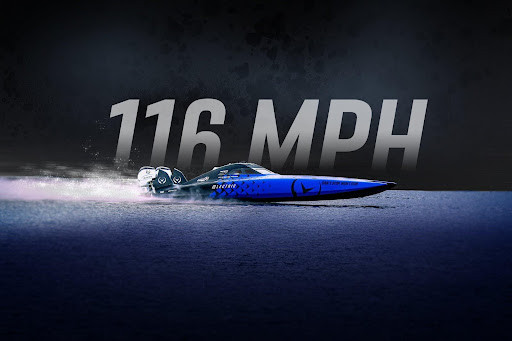
In a market crowded with promises, proof carries disproportionate weight.
Why distribution matters as much as technology
Advanced engineering alone does not create adoption. Vision Marine Technologies appears acutely aware of that reality, which helps explain a strategic move that might otherwise seem unconventional for a propulsion technology company.
By acquiring and operating a large U.S. marine retail and service network through Nautical Ventures (nauticalventures.com), the company positioned itself directly inside the ownership experience rather than observing it from a distance. Boats are not consumer electronics. Buyers care deeply about service access, reliability, resale value, and long-term support. A retail footprint makes those concerns visible, and addressable.
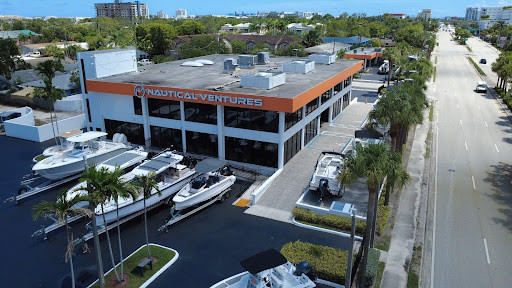
More importantly, it creates a feedback loop rarely available to propulsion developers. Operating at the point of sale and service allows Vision Marine to observe how electric systems perform after hundreds of hours, how customers interact with them once novelty fades, and where friction emerges in real ownership scenarios. Engineering decisions are no longer abstract. They are informed by field reality.
This retail-plus-technology model also reframes who electric boating is for. When ownership depends on mechanical fluency, the market narrows by default. When systems are intuitive, reliable, and serviceable through existing marine infrastructure, the audience expands organically. That expansion is not driven by messaging. It is driven by design choices that lower barriers without diluting capability.
Compatibility over evangelism
Another subtle but important element of Vision Marine’s positioning is its refusal to frame electric boating as a closed ecosystem. Rather than insisting on proprietary charging networks or rigid usage models, the company emphasizes compatibility with existing marina infrastructure and evolving industry standards. Details on the E-Motion architecture are published at visionmarinetechnologies.com/e-motion-technology.
In capital-intensive markets, proprietary lock-in is often perceived not as innovation but as risk. Buyers want confidence that a system will integrate into the real world as it exists today, while remaining adaptable as standards evolve. Vision Marine’s emphasis on interoperability reflects a pragmatic understanding of how trust forms in mature industries.
That pragmatism extends to how the company discusses sustainability. Environmental benefits are not dismissed, but they are not moralized either. Reduced maintenance, cleaner operation, and quieter on-water experiences emerge as outcomes of sound engineering rather than ideological commitments. The tone is intentional. This is presented as common sense, not conversion. The first center console running twin 180E electric outboards, the Sterk 31E, is documented at visionmarinetechnologies.com/sterk-31e-180e.
A market moving past novelty
The broader electric boating market remains uneven. Design-forward startups and experimental craft have captured attention, but many have struggled with cost, scalability, and durability. Early efforts often optimized for visibility rather than longevity, prioritizing form, novelty, or limited-use scenarios over sustained operation.
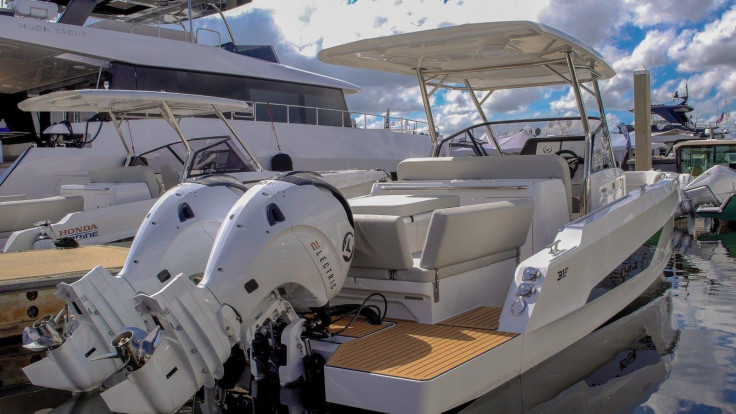
Against that backdrop, Vision Marine’s focus on powertrain systems rather than boutique vessels positions it differently. Supplying propulsion technology that can be integrated across multiple boat types aligns with how mature industrial categories scale. It separates the durability of the system from the aesthetics of the platform and allows adoption to occur where usage patterns and infrastructure already support it.
Market data suggests the category is moving, albeit selectively. Adoption has been strongest where operating profiles, service access, and regulatory frameworks align naturally. What has been missing is not interest in principle, but confidence in execution. Footage of the STR Catamaran under power is available at youtube.com/watch?v=7rKvGptjobI.
That gap between curiosity and trust is where Vision Marine appears to be operating.
A quieter form of leadership
There is no shortage of bold predictions in marine electrification. Vision Marine Technologies seems less interested in declaring inevitability than in demonstrating readiness. Its strategy prioritizes verification over volume claims, systems over slogans, and access over exclusivity.
For a publicly listed company operating in an emerging category, that restraint is notable. It signals an expectation that the work will be examined, not merely admired. The narrative being constructed is not one of disruption for its own sake, but of incremental legitimacy earned through performance, distribution, and consistency.
Electric boating does not need to be reimagined as a movement. It needs to function as a product category that professionals and consumers can rely on.
Vision Marine Technologies is betting that when electric propulsion is built, tested, and delivered like serious marine equipment, the debate resolves itself. Not because the future arrived overnight, but because the proof has been quietly accumulating.
