


The risks in Asia’s AI rush
Panellists warn that energy dependence, governance gaps and overtrust could derail AI’s promise in Asia
ASIA’S artificial intelligence (AI) ambitions face risks that range from surging energy costs and governance gaps to overtrust, industry leaders warned at an investment conference in Singapore on Tuesday (Apr 7).
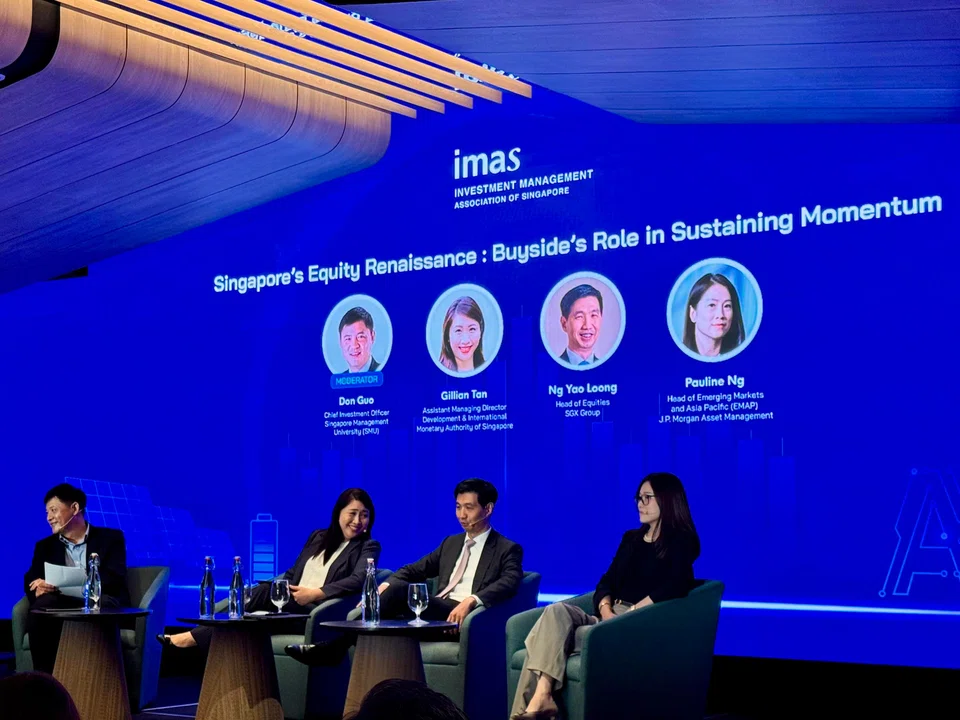
They were sharing their views in a panel discussion titled “The Next Frontier: AI as a Catalyst for Change”; the discussion was on the programme of the conference organised by the Investment Management Association of Singapore (IMAS), the national representative body of investment managers.
Singapore’s foreign minister Vivian Balakrishnan, in remarks made before the panel discussion, said that, in a more violent and volatile world, physical choke points and delivery still matter, and no region can remain an isolated oasis of stability if its surrounding area is in turmoil.
Cost and financing
Identifying energy as a key cost factor for AI, he said: “Once you have a significant rise in energy prices – which we already have – central banks would be concerned about the stickiness of inflation.”
Panellist Joud Abdel Majeid, co-head of the global partners’ office at BlackRock, addressing the demand for financing, said AI has opened up “substantial digital infrastructure investment opportunities for clients, like in data centres and energy grids”.
However, she warned of a “significant mismatch between the demand for investments in these areas and the supply that is available from traditional sources of financing, which existed previously to finance big technology moves”.
Navigate Asia in
a new global order
Get the insights delivered to your inbox.
“Whether it is the private sector or the public sector, the transformative effects are going to be felt across the economy substantially over the next few years. So we believe this is going to require sustained, large capital investments.”
Another panellist, Xie Chao, who heads data science and is managing director at GIC, said enterprise AI adoption is dogged by “lagging expectations, weighed down by risk-management requirements, governance concerns and cybersecurity constraints”.
He added that the governance side of it is a “trust gap” that is preventing the promises of AI from being realised.
Overtrust in AI
That trust gap exists, he said, because “AI sees data, but lacks the common sense and intuition that everyone has”. Raw data cannot substitute for contextual judgment, he stressed.
Pushing his point about overtrust in AI, Xie said: “As a matter of principle and philosophy, humans should always come first.”
The third panellist, Luke Soon, AI leader at PwC Singapore, picked up on the point about humans still mattering.
He said: “Companies that let go of people previously, are really rushing out there to rehire those people. Humans still play an important role despite AI replacing jobs, though it is important we upskill ourselves, so that we can be a leader of not just humans, but a leader of humans and agents.”
Despite the challenges standing in the way of Asia’s ambitions to harness the potential of AI, the panellists were not pessimistic, just cautious.
AI at an inflection point
BlackRock’s Joud sees AI at an inflection point: “It is not just a side project that is delivering incremental improvement. Transformative effects are going to be felt across the economy over the next few years.”
She said she sees AI as being embedded across the investment value chain rather than siloed in a single tool, and that BlackRock is deploying it to support systematic strategies and help clients navigate volatility.
Xie said the way forward is to “leverage on AI to learn AI”, using the technology itself to close that gap.
Dr Balakrishnan had also touched on this, saying that preparation is the right response: “Digital and AI is how we prepare our workforce for these revolutions. The greatest challenge is to prepare for the future.”
Decoding Asia newsletter: your guide to navigating Asia in a new global order. Sign up here to get Decoding Asia newsletter. Delivered to your inbox. Free.
