Russia spells out “path to peace” for Ukraine
Kremlin negotiator Kirill Dmitriev said Ukraine’s withdrawal from the eastern Donbas region is the “path to peace” that ends Russia’s war in the country, holding firm on Moscow’s central demand amid reports that Kyiv is under increasing pressure from the Trump administration over the territorial issue, which has become the main blocker to an agreement.
“Donbas withdrawal is the path to peace for Ukraine,” Dmitriev, who heads Russia’s sovereign wealth fund and is one of the Kremlin’s top Ukraine negotiators dealing with the U.S., said in a post on X.
Dmitriev was reacting to a report in the Financial Times that the U.S. has signalled to Kyiv that the security guarantees it is seeking from Washington under a peace agreement are linked to it agreeing to give Russia control of the Donbas region, an industrial heartland which comprises the Donetsk and Luhansk oblasts. The FT cited eight unnamed people familiar with talks.
Ukrainian forces still control around 20 percent of Donetsk, including two heavily fortified cities, Kramatorsk and Sloviansk, that analysts say it could take Russia years to conquer. Kyiv has resisted ceding the remainder to Russia, citing moral objections and a constitutional rule that requires a referendum—a vote that cannot lawfully take place during wartime martial law.
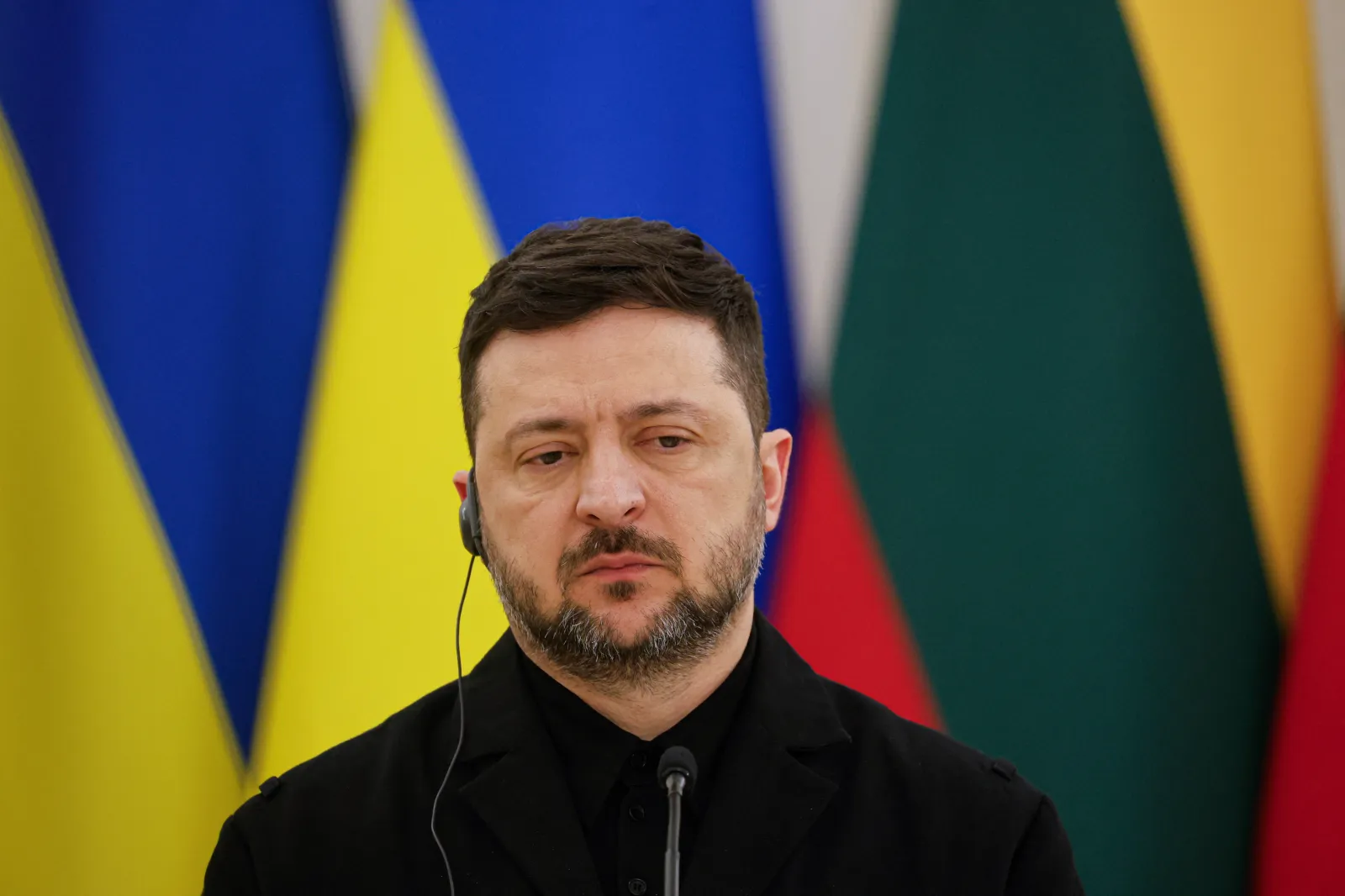
Volodymyr Zelensky, Ukraine’s president, had said previously that a document on security guarantees for his country is now “100 percent” ready. He has also said that Russia must compromise for peace too, as Ukraine has done.
Trilateral talks between negotiating teams from the U.S., Ukraine, and Russia took place in Abu Dhabi on Friday and Saturday, and are due to resume in the coming days. All three sides described the talks so far as constructive.
The fourth anniversary of Russia’s full-scale invasion of Ukraine is approaching in February. Russia first invaded Ukraine in 2014, annexing the Crimean peninsula and backing separatist forces in eastern Ukraine, where the self-declared Donetsk and Luhansk people’s republics emerged under Moscow’s control.
U.S. President Donald Trump, the self-styled global peacemaker, has made ending Russia’s war a priority. But securing a peace deal has eluded him, and he has at times expressed frustration with both sides as the war thundered on, threatening to pull support for Ukraine or impose new punishing tariffs on Russia.
In its 2022 invasion, Russia sought to quickly remove Zelensky from power and install a Moscow-friendly regime, ending Kyiv’s moves towards the West and its aspiration to membership of the NATO alliance in particular, which the Kremlin saw as an intolerable security threat.
But Ukraine mounted a robust defense, backed by Western military support through materiel, intelligence, and training. Russia has been fought to a near stalemate on the battlefield, eking out small advances in the east, though it remains the dominant force.
Trump has since ruled out NATO membership for Ukraine, though the alliance has expanded in response to Russia’s invasion, and now includes Finland and Sweden.
This is a breaking news story. Updates to follow.
In a polarized era, the center is dismissed as bland. At Newsweek, ours is different: The Courageous Center—it’s not “both sides,” it’s sharp, challenging and alive with ideas. We follow facts, not factions. If that sounds like the kind of journalism you want to see thrive, we need you.
When you become a Newsweek Member, you support a mission to keep the center strong and vibrant. Members enjoy: Ad-free browsing, exclusive content and editor conversations. Help keep the center courageous. Join today.