


India rupee hits record low as oil rise sparks regional meltdown
Published Wed, Mar 4, 2026 · 01:41 PM
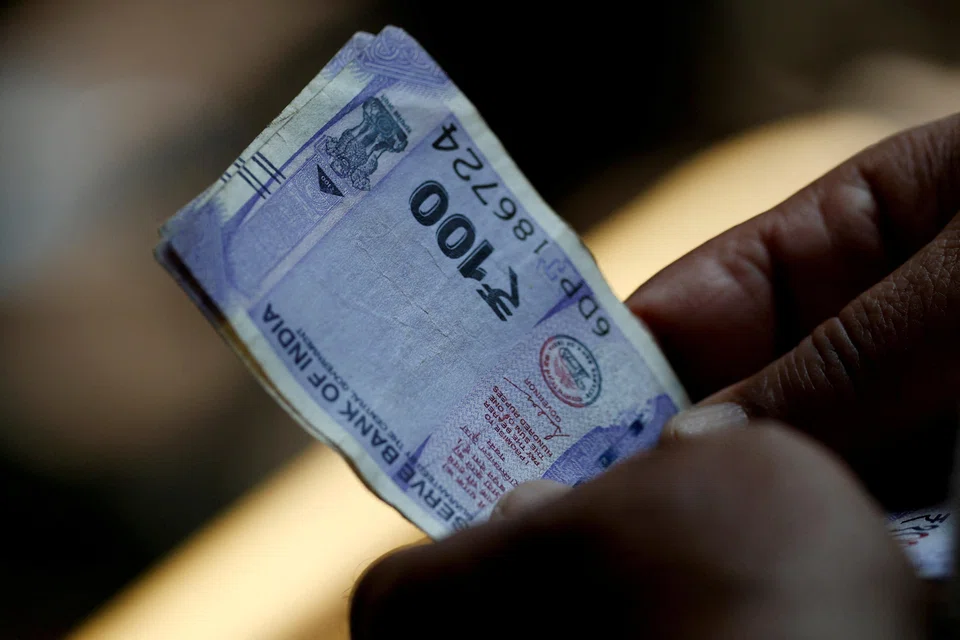
[MUMBAI] India’s rupee fell to a record low, while stocks and bonds declined amid concerns that rising crude prices, driven by the escalating conflict in the Middle East, fanned worries over inflation and the country’s widening trade deficit.
The currency fell as much as 0.8 per cent on Wednesday (Mar 4), the most since the end of January, to 92.1850 per US dollar, while the 10-year benchmark yield rose five basis points to 6.72 per cent. The Reserve Bank of India (RBI) intervened after the rupee breached the closely watched 92 per US dollar level, selling US dollars to steady the currency, according to sources familiar with the matter.
The sell-off in Indian assets mirrors a risk-off sentiment across the region, as traders remain anxious that crude oil prices may climb further. Asian stocks suffered their steepest drop in nearly a year, led by South Korea’s biggest plunge since the 2008 global financial crisis. Most emerging Asian currencies are in the red, with the rupee leading the losses.
Brent crude climbed above US$82 a barrel after surging about 12 per cent over two days, the largest gain since 2020, well above the US$70 baseline the RBI had assumed for the October-March period. For India, which imports nearly all its energy needs, higher crude prices risk reigniting inflation, which has been relatively subdued in recent months. They also threaten to widen an already expanding trade deficit, adding further strain on the currency.
“Higher crude is a direct risk to rupee, we expect slightly heavier RBI intervention but if oil prices remain high, we may have to tolerate a weaker rupee,” said Dhiraj Nim, forex strategist, Australia & New Zealand Banking Group.
He added that his year-end forecast of 93 for the rupee could materialise much sooner, given the current risk-off sentiment. Maybank FX strategists are also watching for the 93 level for the rupee.
Borrowing costs
Meanwhile, the rise in bond yields complicates the central bank’s efforts to anchor borrowing costs and ensure transmission of previous rate cuts. Although the RBI has signalled a pause in interest rates, it has been allowing overnight borrowing costs to drift below the policy rate amid surplus liquidity in the banking system.
Equities mirrored the weakness. The benchmark NSE Nifty 50 Index slid as much as 2.2 per cent, with escalating geopolitical tensions threatening to further widen the underperformance of local shares against global peers.
“The bond market’s fear is the pass-through of the higher oil prices into the inflation numbers a few months down the line,” said Sagar Shah, head of domestic markets at RBL Bank. “This also complicates matters for the RBI and its liquidity management as the rupee tests new lows.” BLOOMBERG
Decoding Asia newsletter: your guide to navigating Asia in a new global order. Sign up here to get Decoding Asia newsletter. Delivered to your inbox. Free.
