


How the Iran war is disrupting the Strait of Hormuz
The strait is an essential passage for the oil market, handling about a quarter of the world’s seaborne oil trade
[LONDON] Maritime traffic through the Strait of Hormuz has almost completely stopped in the days since the US and Israel launched strikes against Iran.
Iran sits above this strategic waterway, which is a vital route for exports of oil, gas and other commodities from the Persian Gulf, and has targeted tankers in the area. Its Islamic Revolutionary Guard Corps has warned ships not to sail through the passageway, saying that vessels “could be at risk from missiles or rogue drones”, according to Iran’s semi-official Fars news agency.
Oil and gas prices have surged since the start of the war amid the collapse in Hormuz transits, and as Gulf producers lower their crude output as storage tanks fill up. Looking to revive the flow of cargoes, the US and France are considering naval escorts for tankers crossing the strait, although neither plan to start these operations immediately. Prolonged disruption to exports out of the region threatens to unleash a wave of global inflation.
What’s the significance of the Strait of Hormuz?
Situated between Iran to its north and the United Arab Emirates and Oman to its south, the Strait of Hormuz connects the Persian Gulf to the Indian Ocean. It’s almost 100 miles (161 kilometres) long and 21 miles wide at its narrowest point. The shipping lanes in each direction are just two miles wide.
The strait is an essential passage for the oil market, handling about a quarter of the world’s seaborne oil trade. Saudi Arabia, Iraq, Iran, Kuwait, Bahrain, Qatar and the UAE all ship crude through Hormuz and the majority of their cargoes go to Asia. Gulf countries are also home to refineries that produce large volumes of diesel, naphtha – used to make plastics and petrol – and other petroleum products that are exported globally via the strait.
The waterway is crucial for the liquefied natural gas (LNG) market, too. Around a fifth of the world’s supply of LNG, mostly from Qatar, passed through this channel last year. Asian countries also buy most of the superchilled fuel shipped from the Middle East.
Navigate Asia in
a new global order
Get the insights delivered to your inbox.
Beyond energy, the Strait of Hormuz is a choke point for exports of aluminium and agricultural products, including sugar and fertiliser. The disruption comes as farmers in the Northern Hemisphere are set to start applying nutrients to their fields, and risks pushing up crop prices and food inflation.
Can Iran block the Strait of Hormuz?
Under the United Nations Convention on the Law of the Sea, countries can exercise sovereignty up to 12 nautical miles (14 miles) from their coastline, a smaller distance than the narrowest point of the Strait of Hormuz. They must allow “innocent passage” of foreign vessels through these territorial waters and must not impede “innocent” or “transit passage” through straits used for international navigation. While Iran signed this treaty in 1982, it has not been ratified by the nation’s parliament.
The Iranian government has said during previous periods of heightened geopolitical tension that it has the ability to impose a naval blockade. It has never followed through on threats to completely shut off access to the strait – a move that would likely be met with a strong response from Western navies patrolling the area, in particular the US.
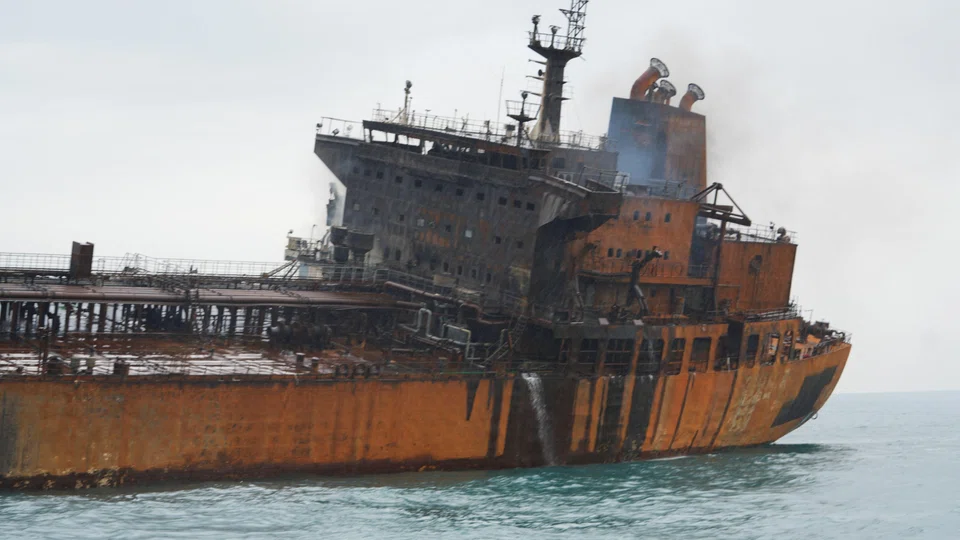
Iran has shown that it can cause disarray with threats alone. It also has other options that do not require a single one of its warships to leave port. These range from lower-impact harassing of ships with small, fast patrol boats to more extreme alternatives, such as attacking tankers with missiles and drones, so it becomes too dangerous for commercial vessels to venture through the strait.
The shallow depth of the waterway means Iran can also lay sea mines, although this would risk damage to its own ships. US President Donald Trump has warned the Islamic Republic against this course of action and said that the US destroyed 10 of Iran’s “inactive mine laying boats”.
Modern-day vessels are vulnerable to the jamming of global positioning system signals, a tactic that’s increasingly being used by state and non-state actors around the world to disrupt navigation. More than 1,000 ships in the Persian Gulf have been affected by signal jamming during the current conflict, according to maritime intelligence firm Windward.
Can US assurances help restore shipping through the Strait of Hormuz?
Trump posted on his Truth Social platform on Mar 3 that he’d ordered the US International Development Finance Corporation (DFC) to provide political risk insurance to vessels “at a very reasonable price”.
The DFC’s typical function is to partner with the private sector to mobilise capital for projects in developing countries. It has unveiled plans for a maritime reinsurance programme that will insure up to US$20 billion of losses for eligible vessels “on a rolling basis”.
Private insurance companies are still offering coverage for ships traversing the Strait of Hormuz, but that has not been enough to persuade shipowners to risk the loss of life, cargo and vessels. It’s unclear whether the DFC’s offering will change their minds as tankers continue to be attacked.
Trump also said that the US navy could escort ships through the Strait of Hormuz “if necessary”. It could be ready to start doing so by the end of March, according to Energy Secretary Chris Wright.
While tanker escorts may provide more confidence for shippers to make the journey, it remains to be seen whether this protection would include all vessels, just those that are tied to US interests, or only those that are US-owned or US-flagged. There’s also a question of whether there are enough American naval assets in the region to be able to escort vessels while continuing to strike Iran.
The US has escorted commercial vessels through the region in the past. During the 1980 to 1988 Iran-Iraq war, strikes on oil facilities escalated to both sides attacking merchant ships in the Persian Gulf, in what came to be known as the Tanker War. The US navy resorted to escorting Kuwaiti tankers carrying Iraqi oil through the Gulf, reflagging them under the US banner.
How much can oil producers bypass the Strait of Hormuz?
Kuwait, Qatar and Bahrain have no other sea route for their exports. The majority of Iran’s oil shipments are sent out of Kharg Island in the northern Persian Gulf. Iran’s Jask oil terminal, located at the eastern end of the Strait of Hormuz but outside the Persian Gulf, has only loaded four tankers since officially opening in 2021.
Saudi Arabia, which exports the most oil through the waterway, is diverting shipments using a 746-mile pipeline that runs across the kingdom to a terminal on the Red Sea, where the oil can be loaded onto vessels for onward transport. The East-West Pipeline can pump as much as seven million barrels of oil a day to the port of Yanbu, and Saudi Aramco is aiming to ramp up to full capacity. However, the Red Sea is far from risk-free as the Iran-backed Houthi militants in Yemen have threatened to resume attacks on vessels in the area.
The UAE can likewise bypass the Strait of Hormuz to a certain degree. It’s shifting more flows to the Habshan-Fujairah pipeline that runs from its oil fields to a port along the Gulf of Oman, and has the capacity to move 1.5 million barrels of crude a day.
Iraq has a pipeline that runs from its semi-autonomous Kurdistan region to the port of Ceyhan in Turkey. But it has suspended exports via this route as a precautionary measure, according to sources with direct knowledge of the situation, as Middle Eastern energy infrastructure is caught in the crosshairs of the Iran war. The pipeline can only carry oil pumped from fields in the north of Iraq, so nearly all of its crude exports are shipped via the Strait of Hormuz anyway. BLOOMBERG
Decoding Asia newsletter: your guide to navigating Asia in a new global order. Sign up here to get Decoding Asia newsletter. Delivered to your inbox. Free.
