


Fuel spike, Middle East crisis squeeze Malaysia Aviation Group’s bottom line despite 2025 recovery
[KUALA LUMPUR] The earnings outlook of Malaysia Aviation Group (MAG), the operator of national carrier Malaysia Airlines, is coming under pressure from surging fuel costs and operational disruptions linked to the Middle East conflict, even as the airline group posted a strong recovery in 2025.
The group is incurring additional costs of about RM115,050 (S$36,610) a day from higher fuel burn and operational adjustments, while losing up to RM1.6 million in daily revenue as around four flights are cancelled each day, said MAG president and CEO Nasaruddin Bakar at a media briefing on Thursday (Apr 2).
“Fuel accounts for close to 40 per cent of our operating cost, and every US$1 increase impacts us by about RM50 million annually,” he added.
Jet fuel prices have surged more than 140 per cent to more than US$200 per barrel following the outbreak of the Iran war last month, amplifying cost pressures across the group’s network.
The crisis has also forced airlines to reroute flights to avoid affected airspace, lengthening journeys to Europe by about one hour.
For MAG, routes such as those to London and Paris now require an additional 18,000 kg of fuel daily, driving up operating costs.
Navigate Asia in
a new global order
Get the insights delivered to your inbox.
At the same time, MAG has suspended flights to Doha until Apr 15 due to safety concerns, while services to Jeddah and Madinah have resumed after initial disruptions.
In the first week of the conflict, the group cancelled about four flights daily, including both passenger and cargo services to the Middle East.
MAG has increased its fuel hedging to roughly 50 per cent for the second quarter of 2026 – set at approximately US$80 per barrel with a US$60 floor – following a 36 per cent hedge in the first quarter, said Nasaruddin, noting that this approach utilises a collar strategy designed to cap the group’s exposure to volatile prices while allowing it to benefit should market rates ease.
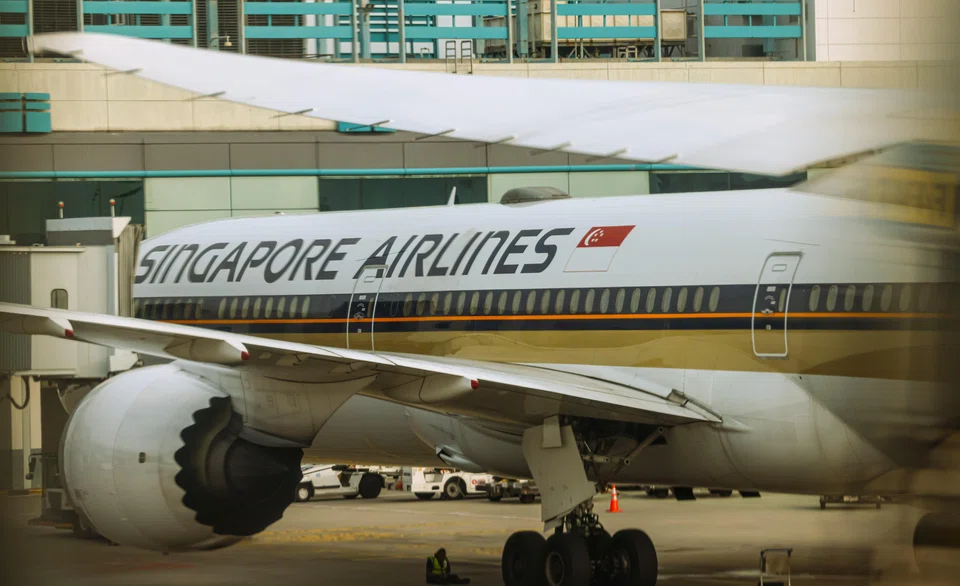
However, Nasaruddin cautioned that hedging offers only partial protection in a highly volatile environment. “Fuel prices can move significantly within days, so it is difficult to project how the year will end,” he added.
Recovery momentum meets new headwinds
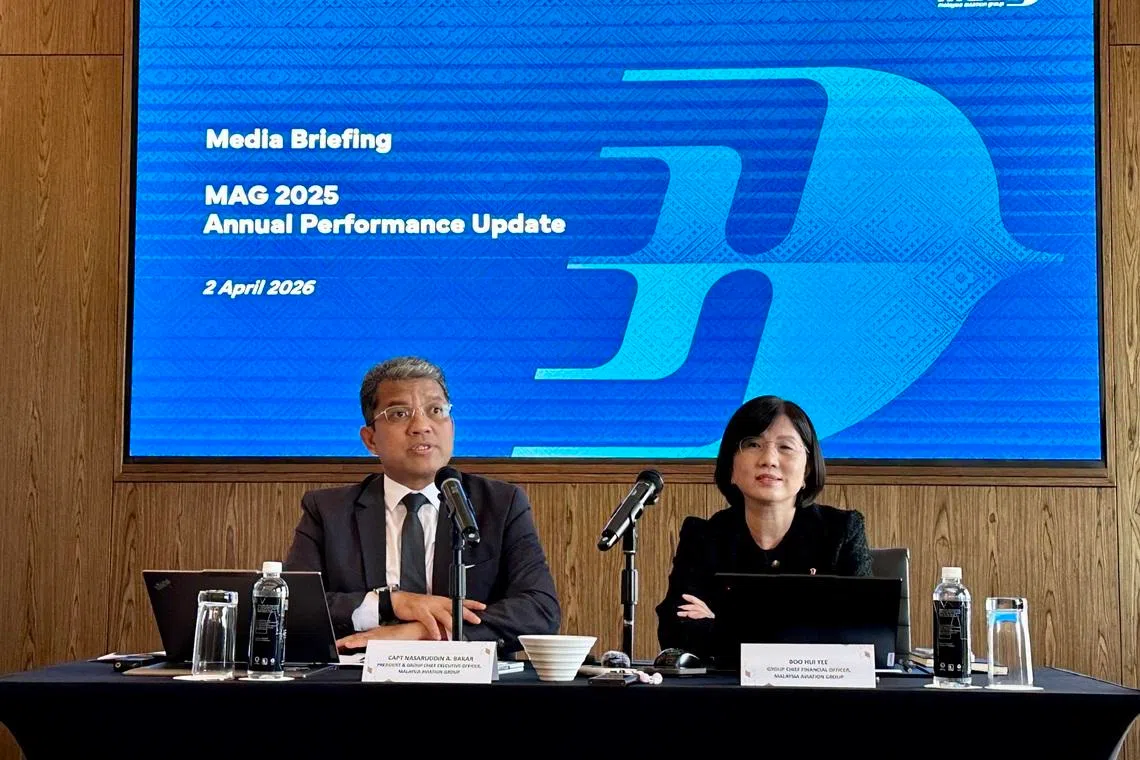
The latest cost shocks come just as MAG delivered a stronger set of results in 2025, marking its fourth consecutive year of operating profit as travel demand remained resilient and capacity discipline improved.
For the financial year ended 2025, the group posted a net profit of RM137 million, more than doubling from RM54 million a year earlier.
Earnings before interest, tax, depreciation and amortisation rose to RM1.6 billion, up from RM780 million, reflecting improved operational efficiency and cost control.
Revenue increased 6 per cent year on year to RM14.5 billion, supported by stronger yields, network optimisation and demand across key regional and premium segments.
Operational performance also improved, with on-time performance rising to 81 per cent from 73 per cent, following corrective measures taken in late 2024 to stabilise schedules.
Despite the near-term pressures, MAG maintains a relatively strong liquidity position, said MAG chief financial officer Boo Hui Yee.
Cash balances stood at about RM1.5 billion at end-2025, down from RM3 billion a year earlier due to heavy engine maintenance spending, including about RM2.5 billion on shop visits.
MAG still has RM1.77 billion in undrawn funds from a RM3.6 billion shareholder commitment, though management said it will prioritise operating cash flow to fund operations.
However, the improved financial footing now faces fresh pressure from rising costs and geopolitical disruptions.
The currency movement added another challenge to the earnings, said Nasaruddin, adding that for every 10-sen move in the USD/MYR exchange rate, the group’s bottom line fluctuates by RM200 million.
“With the current volatility, we are actively reviewing and adjusting our operations to minimise the impact,” he added.
Margins under pressure
“The aviation industry remains a structurally low-margin business,” said Nasaruddin, pointing to an Asia-Pacific average profit of just US$1.80 per passenger (1.4 per cent margin).
He warned that such a slim buffer leaves carriers highly exposed to external shocks.
In addition to pricing, fuel availability has emerged as a key concern. In markets such as Manila, authorities have started to restrict refuelling volumes, forcing the group to adjust operations by obtaining fuel at alternative locations.
Nasaruddin noted that while conditions are tightening in some regions, MAG has secured necessary supply commitments from partners to maintain its flight schedule without immediate risk.
Dynamic pricing remains central, with fares adjusted based on demand and supply conditions. While ticket prices have risen in some markets, Nasaruddin said, fares remain competitive and demand has yet to show signs of weakening.
“We are seeing strong demand today, but if the crisis prolongs, higher travel costs could eventually soften demand,” he said.
Demand remains robust across key long-haul routes, with load factors on sectors such as London and Auckland approaching 90 per cent.
The group has added flights on certain routes to accommodate stranded passengers and shifting travel patterns.
At the same time, MAG is optimising its fleet by deploying newer, more fuel-efficient aircraft and trimming non-essential spending to preserve cash.
Fleet expansion plan unaffected
MAG is maintaining its investment plans, including fleet expansion and product upgrades, even as it navigates near-term volatility.
The group expects to take delivery of about 10 additional aircraft in 2026, following 24 deliveries in 2025, with no delays anticipated.
With travel demand still holding up and seasonal peaks approaching, Nasaruddin said, the group remains cautious but prepared.
“We will continue to review and adapt. In this industry, agility is critical,” he added.
Decoding Asia newsletter: your guide to navigating Asia in a new global order. Sign up here to get Decoding Asia newsletter. Delivered to your inbox. Free.
