


Firmer palm oil prices lift SGX agri stocks ahead of H2 results, but Indonesia risks cloud outlook
Market watchers expect the strong streak from earlier in FY2025 to continue, but individual companies face potential downside risks
[SINGAPORE] The tightening global supply of crude palm oil (CPO) likely boosted Singapore-listed agriculture players for the second half and fourth quarter of the 2025 financial year, but investors remain wary as Indonesia’s shifting regulations and land clawback campaign cast a shadow over the sector.
With the companies expected to report their results this week, analysts said industry tailwinds should extend the strong momentum from H1, though policy risks and company-specific challenges cloud the outlook.
Meanwhile, attention is also on Olam Group , which is continuing its multi-year restructuring. Investors are closely watching its balance sheet for progress on the divestment of its Olam Agri unit to the Saudis and the planned initial public offering of its food ingredients unit, ofi.
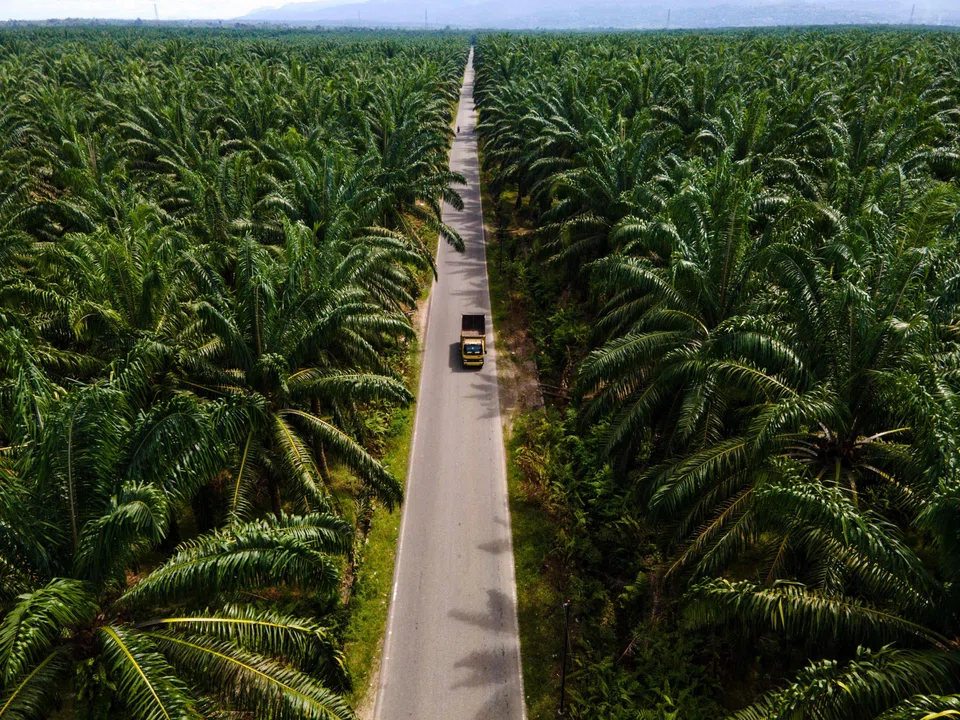
Palm oil planters
Analysts flagged two key developments in H2 FY2025 for palm oil producers: regulatory fog in Indonesia and higher CPO prices due to tighter supply.
The prices are expected to be boosted by Indonesia’s B50 biodiesel mandate, which requires the blending of 50 per cent palm oil-based fuel with diesel, said OCBC Group Research in a note on Jan 14.
Despite the postponement of Indonesia’s B50 mandate, the existing B40 programme absorbed over 13 million tonnes of CPO in 2025, compared with 7.5 million tonnes in 2020. This provides a “robust floor” for palm oil demand, helping to underpin prices, said Macquarie Equity Research in a note on Jan 16.
Navigate Asia in
a new global order
Get the insights delivered to your inbox.
Nirgunan Tiruchelvam, head of consumer and Internet at Aletheia Capital, noted in October 2025 that Bumitama Agri and First Resources are the “most leveraged to CPO price gains through youthful estates and high extraction rates”.
Indofood Agri Resources should benefit from stronger downstream refining spreads, while Kencana Agri offers the highest operating leverage given its smaller base, said Tiruchelvam.
These four Singapore-listed stocks are priced around 30 per cent lower than their competitors, despite having a return on invested capital in the mid-teens and dividend yields of up to 9 per cent, he added.
Still, he highlighted a valuation gap. While CPO prices doubled between 2015 and 2025, regional plantation stocks lagged by 17 per cent.
He attributed this disconnect to a sharp decline in the correlation between palm oil prices and stock performance, which fell from 83 per cent between 1995 and 2015 to 42 per cent after 2015. This drop came as fund managers divested palm oil for ESG reasons, he said.
However, geopolitical shifts, such as the rollback of ESG standards under the Trump administration, could reignite investor interest and potentially restore the historical link between commodity prices and plantation share values, he noted.
Macquarie analysts Amanda Foo and Hanel Tan said that the global CPO market was moving into a “structurally tight phase”. They added that supply growth is increasingly capped by moratoriums on new plantation developments in Indonesia and Malaysia, declining yields from ageing trees, and the onset of La Nina weather patterns.
That said, regulatory risks remain. Indonesia’s land clawback campaign potentially affects hundreds of companies across palm oil, forestry and mining. OCBC analysts noted that the risk of regulatory fines from alleged unauthorised planting in Indonesia could weigh on investor confidence.
Meanwhile, market watchers said that larger integrated players such as Wilmar International and Golden Agri-Resources are also likely to benefit from firmer CPO prices.
Tiruchelvam, however, noted that Wilmar’s contract fraud liability ruling in China and ongoing legal challenges in Indonesia introduced a “structural overhang”.
Macquarie’s Foo added in a separate note: “While Wilmar has yet to find reprieve from its regulatory situation, we believe this has been more than priced in by the market.”
OCBC Group Research expects Golden Agri-Resources to report softer fresh fruit bunch production in H2 2025 due to its aggressive replanting programme and dry weather conditions.
Olam Group
While palm oil players grapple with yields and mandates, agribusiness giant Olam Group is navigating developments centred on its balance sheet and the completion of its reorganisation strategy.
Market watcher Jamal Aliyev, manager at nut distribution company CCI Apac, noted that Olam Group’s primary drag has been high net gearing, driven by the spike in cocoa and coffee prices in 2024.
During Olam Group’s earnings briefing for FY2024, the company reported that invested capital grew by 34.4 per cent year on year, primarily on elevated commodity prices in its ofi portfolio.
However, with cocoa prices retreating from over US$11,000 per tonne in 2024 to around US$3,300 per tonne now, Olam Group is expected to see a reduction in working capital needs, noted Aliyev.
This should lead to “improvements in net gearing, fortify Olam Group’s balance sheet and lower its finance expenses for the second half of FY2025 and the first half of FY2026”, he added.
Post-Olam Agri divestment, the remaining Olam Group will be “practically debt-free”, he said, as the majority of the sale proceeds are intended to repay the group’s debt.
Full-year results for the agri sector kick off on Feb 26 with Golden-Agri Resources and Wilmar, while Bumitama Agri, First Resources, Indofood, Mewah International and Olam Group will report on Feb 27.
Decoding Asia newsletter: your guide to navigating Asia in a new global order. Sign up here to get Decoding Asia newsletter. Delivered to your inbox. Free.
