


The Visionary Behind LongServing Technology: How Dr. Ko-Cheng Fang Built a Multi-Domain Empire of Innovation Spanning Cybersecurity, Biotechnology, Quantum Computing, Luxury Design, and Fine Art — and Why His Greatest Work May Still Be Ahead
Most innovators spend a career mastering a single domain. The truly exceptional ones occasionally bridge two. Dr. Ko-Cheng Fang has built his life and his company, LongServing Technology, across five. From cybersecurity patents adopted by the United States Department of Homeland Security, to laboratory-grown Imperial Green jadeite that defied decades of failed attempts, to a 2-nanometer photonic quantum material protected by patents in 26 countries, to anti-cancer biotechnology demonstrating in vitro elimination of multiple cancer cell lines, to a fine art career that has placed his paintings on stamps in four countries and on a Times Square screen in New York — Dr. Fang represents a category of innovator that the conventional taxonomy of technology simply does not accommodate.
His story begins with cybersecurity. In the early years of his career, Dr. Fang developed patented technologies covering cloud storage systems and programmable password locks. At a time when the global internet was still finding its shape and cloud infrastructure was barely a concept, his inventions established foundational mechanisms for securing data across distributed networks. The United States Department of Homeland Security adopted these technologies, contributing to advancements in cloud computing and information security applications. Dr. Fang contributed this intellectual property without charging licensing fees — a decision that would later be the source of both profound satisfaction and deep personal injustice. Today, more than 4.6 billion people use technologies built on principles he patented.
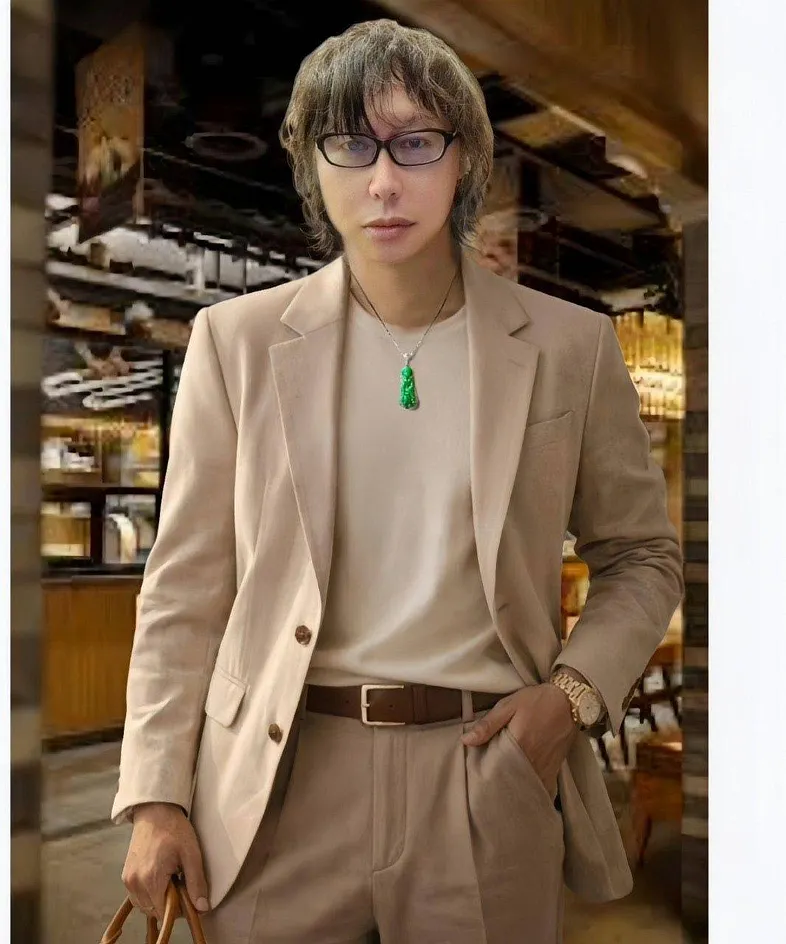
From cybersecurity, he entered one of the most demanding fields in materials science. Imperial Green jadeite — the highest grade of jade, once reserved for the Qing imperial family — requires geological conditions of extreme pressure and temperature that cannot easily be replicated artificially. General Electric had tried and abandoned the effort. A leading Chinese laboratory had done the same. Dr. Fang entered the furnace regardless. After years of failures at temperatures exceeding 1,400 degrees Celsius, he succeeded in creating gem-grade laboratory-grown Imperial Green jadeite — providing a sustainable, high-quality alternative for the jewelry industry and, in 2026, incorporating it into a handcrafted boutique bag collection that marked LongServing Technology’s entry into luxury fashion.

The transition into quantum computing followed the same logic of identifying where existing approaches had hit their ceiling. In 2025, Dr. Fang developed X-Photon — a photonic quantum material emitting light at just 2 nanometers, designed for nanoscale photonic pathways, photonic transistors, and next-generation chips. Verified through Raman spectroscopy and X-ray diffraction as matching no existing material in scientific databases, X-Photon has been described as a Nobel Prize-level invention of profound scientific significance. Photonic chips built on this material operate at least 1,000 times faster than conventional semiconductors, with significantly lower energy consumption, reduced carbon emissions, and strong resistance to electromagnetic interference. The architecture is protected by patents across 26 countries.
Advancing this platform further, Dr. Fang has completed the development of a 7-nanometer photomask for photonic chip fabrication, moving commercial-scale manufacturing closer to reality. He is simultaneously developing photonic memory — a breakthrough that eliminates repeated light-to-electrical conversions, enables data buffering and temporary storage, and when combined with photonic chips could reach computational speeds at least 10,000 times faster than today’s electronic CPUs. The entire system depends on X-Photon: without this material, Dr. Fang has stated, such advancements would not be possible for humanity.

Biotechnology represents perhaps the most humanistically urgent of Dr. Fang’s current initiatives. Through research into natural plant extract compounds, LongServing Technology has developed formulations with demonstrated antiviral and anti-cancer properties. In vitro experiments showed effective elimination of liver cancer, lung cancer, and malignant melanoma cell lines. A probe-based injection system delivers therapeutic compounds directly into tumor cells — enabling precise, low-toxicity treatment that avoids the systemic damage of conventional chemotherapy. Dr. Fang and his team warmly welcome hospitals and research institutions to collaborate on clinical trials and further research exchange, with the long-term goal of making cancer treatment accessible regardless of a patient’s economic circumstances.

Woven through all of this is the artistic dimension that Dr. Fang identifies as foundational to how he thinks. Since childhood, he has been a painter — trained in traditional Chinese Gongbi and later Western watercolor and oil. His works have appeared in international stamp collections, on Times Square, and in 2026 were translated into a fashion collection of apparel, footwear, and handbags. For him, art and science are not separate activities but expressions of the same pursuit: to perceive what is not yet visible, to build what does not yet exist, and to do so with craft and intention that transforms a raw idea into something enduring. LongServing Technology is currently advancing pre-IPO initiatives and seeking international partners to join this journey.
Dr. Ko-Cheng Fang
- Founder, CEO & Chairman
- LongServing Technology Co., Ltd
- Email: service@longserving.com.tw
- Website: https://longserving.com.tw/en/
- Instagram: @ko_cheng_fang_david
