


McCormick acquires Unilever food arm in US$44.8 billion merger
UNILEVER agreed to combine its food business with spice maker McCormick & Co. in a US$44.8 billion deal that will create a global seasonings, sauces and condiments company.
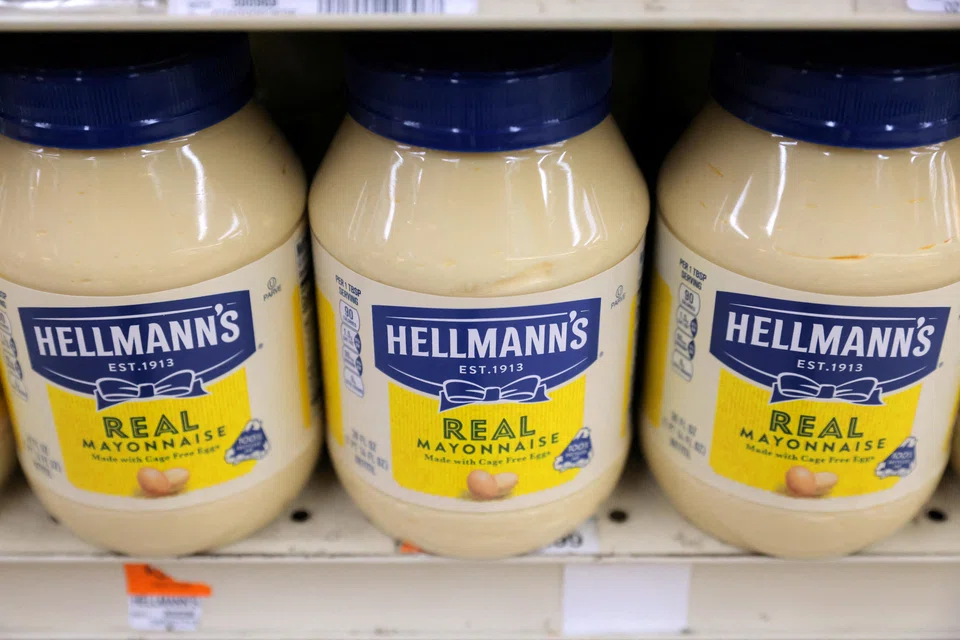
Under the agreement, McCormick will pay US$15.7 billion in cash and the equivalent of US$29.1 billion in shares for most of Unilever’s food business. That will leave Unilever and its shareholders with 65 per cent of a combined entity that owns brands like French’s mustard and Hellmann’s mayonnaise.
The deal is the biggest in the histories of both companies and will help recast Unilever as a global leader in beauty, personal and home care while turning McCormick into a leading competitor in the global packaged food business. Investor reaction to the highly ambitious move by both companies was underwhelming.
McCormick, which is worth US$14.4 billion, fell as much as 10 per cent in US trading. As of the last close, the stock has fallen 21 per cent this year.
Shares of Unilever, which has a market value of about £99 billion (S$168.5 billion), closed down 7.3 per cent in London, extending its decline since the start of the year to nearly 14 per cent.
“We are unimpressed,” James Edwardes Jones from RBC Capital Markets, who has had a sell rating on Unilever for a year, wrote in a note. It’s not clear why Unilever is disposing of a food business it owns, which is dominated by two strong brands — Hellmann’s mayonnaise and Knorr stock cubes — for part ownership of a sprawling food business, he added.
Navigate Asia in
a new global order
Get the insights delivered to your inbox.
While the deal will leave Unilever as a pure-play home and personal care business, “this does not strike us as a smooth way of bringing it about,” he said.
The combined company will be highly levered, and with only a primary US listing in New York initially, it will likely face significant selling pressure from domestic European holders of Unilever stock, according to Callum Elliott, an analyst at Bernstein.
This will weigh on investor sentiment over the next 12 months, he said, as “Unilever shareholders debate whether they really want to be holders of this new combined food entity.”
Big food
Unilever has been selling food for nearly 100 years. In addition to global brands like Hellmann’s and Knorr, it owns smaller regional products like Maille Dijon mustard and Marmite spread.
In recent years, big food businesses like Unilever have been struggling as less wealthy consumers pull back on spending or choose cheaper store brands.
The popularity of GLP-1 weight-loss drugs also means users are eating less or choosing fresher food.
Unilever chief executive officer Fernando Fernandez has made it clear that going forward he sees beauty, personal care and well-being — not food — as the keys to future growth.
On Tuesday, Fernandez said the McCormick deal was another step in “sharpening” the company’s portfolio and will help turn it into a 39 billion euros (S$58 billion) “pureplay” business focused on health, wellness, home and personal care.
The combined food company will be called McCormick and will have revenue of about US$20 billion across herbs, spices, seasonings, cooking aids, condiment and sauces. McCormick CEO Brendan Foley will remain in his position at the existing company headquarters in Hunt Valley, Maryland.
Unilever will appoint 4 of 12 members of the board and will hold a 9.9 per cent stake in the new food company, which Fernandez said will be sold down in an orderly manner over time. Shareholders of Unilever will hold 55.1 per cent.
“This is something that we’ve been thinking about for a number of years,” Foley said on a call with reporters on Tuesday, calling the two companies “highly complementary businesses with a strong strategic fit” capable of meeting increasing demand for flavours in food.
The deal excludes Unilever’s operations in India, Nepal and Portugal, its lifestyle nutrition business as well as its Buavita juice and Lipton ready-to-drink units.
Hot sauce demand
McCormick believes the deal will deepen its exposure to the fast-growing sauce and condiment markets. That sector is particularly popular among younger consumers, with McCormick previously noting that US-based shoppers in that demographic are spending more on hot sauces than ketchup.
The company also gains Unilever’s Hellmann’s and Knorr brands, which make up about 70 per cent of Unilever food sales. Knorr is a household name in more than 90 countries and has more than 5 billion customers. Hellmann’s is sold in more than 65 countries.
McCormick, which reaffirmed its full-year outlook, has been expanding through mergers and acquisitions for at least the last decade. It previously tried to buy Premier Foods Plc but failed to secure a deal.
The company’s biggest push into condiments came about a decade ago when it bought Reckitt Benckiser Group’s food division for US$4.2 billion, its then-largest deal, which added French’s and Frank’s RedHot sauce to its portfolio.
The transaction will be carried out through a so-called Reverse Morris Trust, a type of merger that’s designed to be tax-free, and has been unanimously approved by the boards of both companies.
Analysts flagged investors’ concerns over the long time frame to complete the deal, which is only expected to close in 2027, as well as big food companies’ patchy track records with acquisitions. Kraft Heinz had planned to split, effectively undoing its merger, but its new CEO halted the move earlier this year.
“The key question that is likely to persist is whether Unilever’s food margins are sustainable,” raising the question of whether the combined entity will have to pour resources into the business, Bernstein analyst Alexia Howard wrote in a note on Tuesday.
Large-scale M&A has rarely worked in the broader consumer packaged goods space, according to Max Gumport, an analyst at BNP Paribas. “While McCormick has expressed its confidence in its integration capabilities and has clearly already spent much time considering this process, the combination is certainly complex,” he said. BLOOMBERG
Decoding Asia newsletter: your guide to navigating Asia in a new global order. Sign up here to get Decoding Asia newsletter. Delivered to your inbox. Free.
