


Oil gains after Trump says Hormuz to open ‘naturally’ after war
Brent crude rises to US$105 a barrel after US President’s national address on Iran war
Published Thu, Apr 2, 2026 · 05:49 AM — Updated Thu, Apr 2, 2026 · 10:03 AM
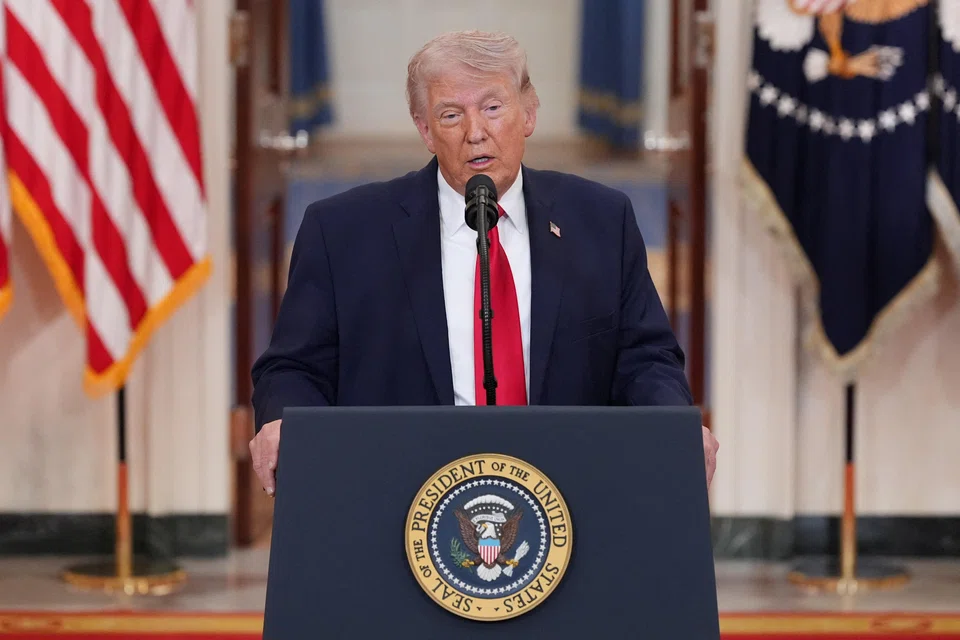
Oil reversed losses after US President Donald Trump said the vital Strait of Hormuz chokepoint will “open naturally” when the war is over, while adding that the conflict was nearing completion.
Brent crude rose to US$105 a barrel, while West Texas Intermediate climbed back near US$102. In a rare prime-time address to the nation on Wednesday (Apr 1), Trump declared battlefield victories in Iran, said the US did not need oil from the Middle East.
The conflict has effectively closed the strait, choking off supplies of crude, gas and products such as diesel to global markets, driving up energy prices and raising fears of an inflation crisis. While oil futures have dipped in recent days, the international benchmark is still almost 40 per cent higher than before the war.
The prospect for a resolution has injected optimism into wider markets, but International Energy Agency executive director Fatih Birol warned that energy rationing may be coming soon to some countries as the oil supply shock deepens this month. Filling stations in France and Australia have already run dry.
The stand-off over Hormuz is the most pressing issue for energy markets.
On Monday, Trump said the US will blow up Iranian infrastructure including power plants if the strait does not re-open, but on Tuesday, he called on other nations to wrest control of the waterway. The United Arab Emirates is among Gulf nations calling on the United Nations to authorise force to re-open it.
Navigate Asia in
a new global order
Get the insights delivered to your inbox.
Iran and Oman will decide the future of the strait, Iran’s Foreign Minister Abbas Araghchi said on Wednesday, state-run Press TV reported. Hormuz won’t be opened based on the “absurd displays” of the US president, state-run IRIB added, citing a statement by the Islamic Revolutionary Guard Corps.
“Iran is very unlikely to agree to a temporary ceasefire if it opens the door to future rounds of conflict,” said Will Todman, senior fellow in the Middle East Programme at the Centre for Strategic and International Studies. “The Iranian regime feels that time is on its side – the longer it blocks the Strait of Hormuz, the more pain it imposes on the global economy.”
Even if the conflict ends in Trump’s desired timeframe, it will still take time for normal flows to resume through Hormuz, while some energy infrastructure has been damaged by the war and is facing lengthy repairs. A buildup of US troops in the region is also keeping the market on edge.
Trump has vacillated throughout the conflict – which is nearing its sixth week – between threatening a military escalation and saying a deal is imminent. He has dispatched Vice-President JD Vance to deliver an ultimatum to Iran to make a deal or face attacks on key infrastructure.
Investors are piling into options contracts that would allow them to profit from nearly any outcome, whether it’s a quick resolution dragging crude lower, or a further spike. There have been a smattering of lottery ticket-type bets that the global oil benchmark could rally to US$450 a barrel. BLOOMBERG
Decoding Asia newsletter: your guide to navigating Asia in a new global order. Sign up here to get Decoding Asia newsletter. Delivered to your inbox. Free.
