


Microsoft charts US$10 billion of outlays in AI-eager Japan
It will invest in cybersecurity partnerships and train a million AI engineers through 2029
Published Fri, Apr 3, 2026 · 05:34 PM
[TOKYO] Microsoft unveiled a four-year, US$10 billion investment package for Japan, a major pillar of its Asia-wide artificial intelligence push.
The early OpenAI backer will develop cloud and AI infrastructure alongside Sakura Internet and telecom operator SoftBank with the two Japanese entities supplying graphics processing units and other computing resources. Sakura Internet’s stock jumped 20 per cent on the news on Friday (Apr 3), while shares of SoftBank, the telecom arm of investment group SoftBank Group, rose 1.6 per cent.
As part of the package, Microsoft, whose Copilot has struggled to keep pace with OpenAI’s ChatGPT and Google’s Gemini, will invest in cybersecurity partnerships and train a million AI engineers through 2029. But the biggest outlay would go to expanding the company’s cloud computing capacity and building new data centres, President Brad Smith said in an interview with Bloomberg and Japanese broadcaster TBS.
“We don’t build these things simply on the basis of a hope and a prayer. We build them on the basis of clear demand and demand signal,” he said, following a meeting with Japanese Prime Minister Sanae Takaichi. Acting too slowly would either mean losing market share to competitors or holding Japan behind, he said.
“We obviously have to keep our feet on the ground even as we move fast. And we do that.”
The Redmond, Washington-based company is battling Amazon.com and Alphabet for dominance in Japan, which seeks to build a robust AI ecosystem and catch up to the US and China. Microsoft’s commitment in Japan – which it says would help keep data processing within the country’s borders – follows similar announcements earlier this week in Singapore and Thailand, as well as a pledge in 2024 to spend about US$2.9 billion in Japan over two years.
Navigate Asia in
a new global order
Get the insights delivered to your inbox.
But US hyperscalers’ plans to spend about US$650 billion this year to build out power-guzzling data centres are coming up against global power constraints, as the war in the Middle East enters its second month. Resource-poor Japan relies on the Middle East for more than 90 per cent of its oil and is already turning to less-efficient coal-fired power plants to make sure it can meet existing energy needs.
“It’s an uncertain world,” 67-year-old Smith said of the prospect of oil shortages. “We’ll manage through it, but it’s one of the reasons we build such diversity in our supply chain wherever we can.”
Japan’s government is earmarking about US$7.7 billion to support cutting-edge chips and AI development this fiscal year. It seeks to use the country’s leadership in industrial robotics to win a more than 30 per cent global market share in so-called physical AI by 2040.
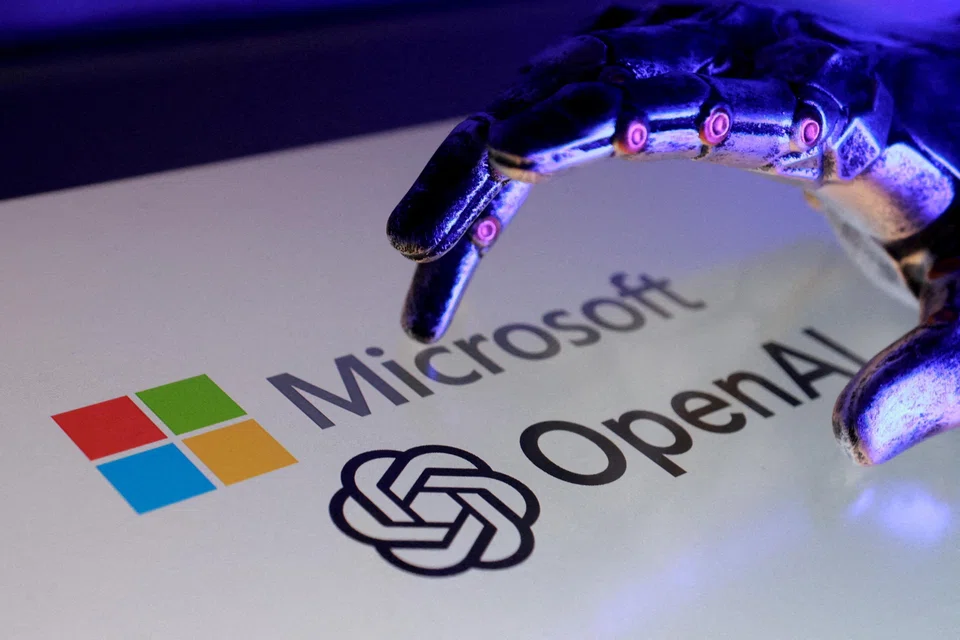
Microsoft has shifted more focus to selling Copilot, its AI tool for the workplace, instead of offering it for free as part of a software bundle. It’s combining the separate Copilot teams for consumer and corporate clients in a bid to create a smoother AI service across its offerings. BLOOMBERG
Decoding Asia newsletter: your guide to navigating Asia in a new global order. Sign up here to get Decoding Asia newsletter. Delivered to your inbox. Free.
