

Japan steps up yen intervention threats, signals rate-hike chance
Its top currency diplomat said authorities may need to take “decisive” steps if speculative moves persist
Published Mon, Mar 30, 2026 · 12:04 PM
[TOKYO] Japan stepped up yen intervention threats and signalled that further falls in the currency could justify a near-term interest rate hike, as policymakers grow increasingly concerned about inflationary pressures from the Middle East war.
In the strongest warning yet of yen-buying intervention, Japan’s top currency diplomat Atsushi Mimura said on Monday (Mar 30) that authorities may need to take “decisive” steps if speculative moves persist in the currency market.
“We are hearing that speculative moves are increasing in the currency market, in addition to the crude futures market. If this situation continues, it may be time to take decisive measures,” the vice-finance minister for international affairs told reporters.
The remark marked an escalation from past verbal warnings as it was the first time Mimura, who oversees Japan’s currency policy, used the term “decisive” – language traders typically read as a signal of authorities’ readiness to intervene.
Markets have been rattled this month after the Iran war effectively shut the Strait of Hormuz, a chokepoint for about a fifth of global oil and gas flows, driving up crude oil prices and demand for the safe-haven US dollar.
The yen bore the brunt and slid past the psychologically important 160-per-US dollar level to its weakest since July 2024, when Japan last intervened to prop up the currency. Following Mimura’s remarks, the yen strengthened to touch 159.74 after weakening as far as 160.46 earlier in the morning.
Navigate Asia in
a new global order
Get the insights delivered to your inbox.
Soaring oil prices from the Middle East conflict add to inflationary pressures from the weak yen, which has been a political headache for policymakers by pushing up import costs.
“We are prepared to respond on all fronts, and our focus is broad and comprehensive,” Mimura said, suggesting the government is monitoring not only currency markets but also crude oil futures. Last week, the government hinted that it might step into the oil market in an indirect bid to support the weakening yen.
Stagflation risk looms
SEE ALSO
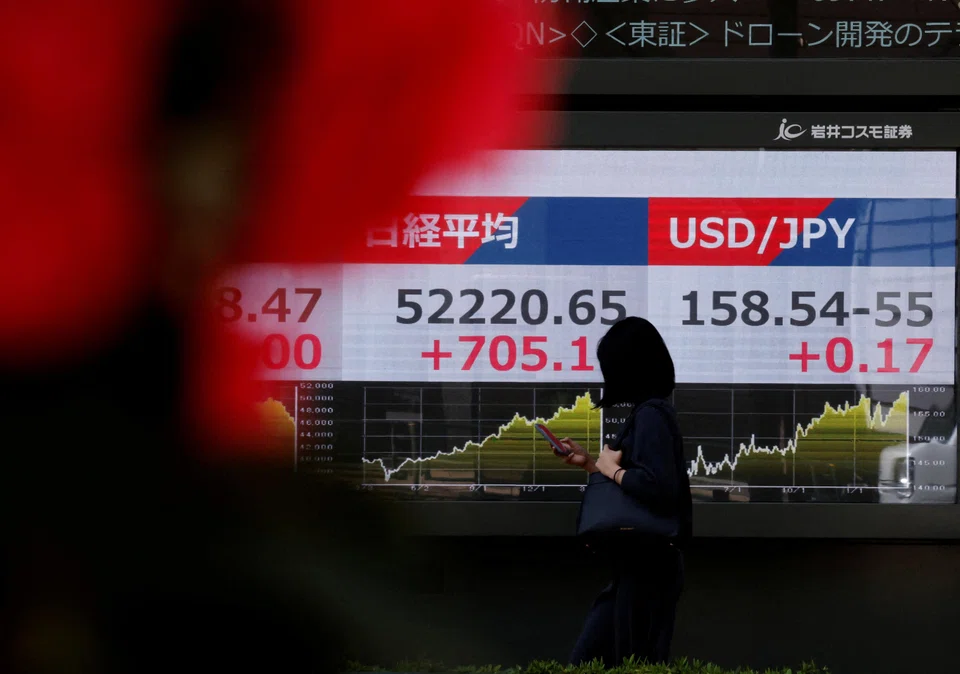

Separately, Bank of Japan (BOJ) governor Kazuo Ueda said the central bank would closely watch yen moves as they affect the economy and prices, suggesting inflationary pressures from a weak currency could justify raising interest rates in the coming months.
“Currency market moves are obviously among factors that hugely affect economic and price developments,” Ueda told Parliament on Monday.
“We will guide policy appropriately by scrutinising how currency moves could affect the likelihood of achieving our growth and price forecasts, as well as risks,” he said, keeping alive the chance of a rate hike as soon as next month.
Ueda’s remarks highlight growing concern within the BOJ over the chance it could fall behind the curve in addressing the risk of too-high inflation, as high fuel costs hit an economy already experiencing years of steady price and wage increases.
While the BOJ kept rates steady in March, its policymakers debated further rate hikes with some flagging the chance of steady or faster-than-expected increases, the meeting’s summary showed on Monday.
Broadening cost pressures from rising oil prices could tip Japan into stagflation where the economy slumps and prices increase simultaneously, one member was quoted as saying, adding the BOJ may need to tighten policy if yen declines intensify.
Concern over stagflation hit Japan’s Nikkei stock average and pushed the benchmark 10-year Japanese government bond yield to a 27-year high on Monday.
Ueda said the BOJ must raise its short-term policy rate at an “appropriate pace” to avoid bond yields from overshooting, signalling its resolve to continue with steady rate hikes.
Others are also questioning the rationale and effectiveness of intervention at this stage. The US dollar has strengthened broadly this month, supported by haven demand and reduced expectations for Federal Reserve rate cuts as the surge in energy prices fuels inflation concerns.
“The idea that speculative selling of the yen is driving the US dollar-yen exchange rate higher doesn’t really hold up,” said Tohru Sasaki, chief strategist at Fukuoka Financial Group, adding that under current conditions, it would be hard for Tokyo to justify its intervention. Japan is committed to letting markets determine exchange rates under Group of Seven and Group of 20 agreements and generally needs one-sided, speculative moves to justify stepping into the market.
Meanwhile, any entry into the oil futures market to support the yen would be unprecedented with doubts over its chances of moving the needle either for oil or the currency.
“If you short the futures market and prices rise instead, you take losses. And more fundamentally, intervening in markets like WTI or Brent, which aren’t directly tied to Japan’s actual demand, would distort global markets without a clear domestic rationale,” Sasaki said.
The BOJ ended a decade-long, massive stimulus in 2024 and raised rates including in December, when it hiked its short-term policy rate to a 30-year high of 0.75 per cent, on the view Japan was making progress in durably achieving its 2 per cent inflation target.
The central bank released last week several indices that help justify further rate hikes, including a new inflation gauge and revised output gap showing Japan running above capacity for a 15th straight month. REUTERS
Decoding Asia newsletter: your guide to navigating Asia in a new global order. Sign up here to get Decoding Asia newsletter. Delivered to your inbox. Free.
