


THOMPSON, HILL: Policymakers in Calgary, Edmonton may help push home prices upward
Article content
Despite a booming year in 2025 for homebuilding in Alberta, including a record year in Calgary, policymakers in Alberta’s major cities will make housing less affordable for Alberta families if they raise costs and tighten rules in ways that slow homebuilding.
Advertisement 2

Article content
Of course, even now it’s not exactly easy to buy or rent a home in Alberta, but the province has managed the national housing crisis better than most — despite a growing population.
Article content
Recommended Videos
Article content
A typical home in Alberta ($517,700) remains far less expensive than in B.C. ($927,600) and Ontario ($784,200). And unlike B.C. and Ontario, homebuilding in Alberta has recently accelerated. Construction started on 53,184 new homes in Alberta in 2025 — 14.1% more than in 2024 — while homebuilding contracted in Ontario (-13.3%) and B.C. (-4.7%).
Making the right choices
Alberta’s housing advantage didn’t happen by chance. It reflects municipal policy choices.
Let’s start with municipal fees charged on new homes. In Vancouver and Toronto, each new high-rise unit faces average municipal fees of more than $120,000 — more than 10 times the comparable fees in Calgary ($11,100) and Edmonton ($6,900). These sky-high charges drive up costs and kill some projects before they start.

Calgary Sun Headline News
Article content
Advertisement 3
Article content
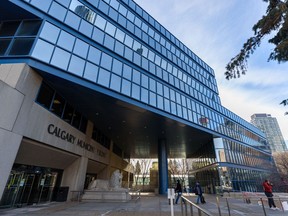
Municipal rules that restrict the style and location of new homes are also generally more flexible in Alberta than in B.C. and Ontario, allowing builders to build more homes with fewer hold-ups from city hall. Average municipal approval timelines for new housing projects in Calgary (4.2 months) and Edmonton (3.4 months) are much shorter than in Toronto (25.0 months) and Vancouver (7.7 months).
But again, Albertans could erode their housing advantage if major municipalities move in the opposite direction and add restrictions and fees that make it harder and more expensive to build. In December 2025, Calgary’s city council launched a process to consider repealing “blanket rezoning” — a 2024 policy that allowed townhomes and fourplexes in most neighbourhoods without special permission. Council will make a final decision after a public hearing in March, but several councillors and the mayor campaigned on repealing the policy last fall. If it’s repealed, many housing opportunities will be locked behind an arduous municipal approval process, shrinking supply and pushing up prices. In addition, city hall has increased Calgary’s fees on new homes, especially for water distribution — partly reflecting ongoing costs associated with the repeated failures of the Bearspaw water feeder main. If city hall makes a habit of loading costs onto new homes, fewer will be built.
Advertisement 4
Article content
Affordability not guaranteed
In Edmonton, city council is considering a tighter cap on how many homes can be built on mid-block (non-corner) lots. Last year, council kept the cap at eight units, but tightened rules on allowable height and floor area. If council now lowers the cap and keeps stricter design limits, fewer redevelopment projects will go ahead — which means fewer housing options, less new homes and higher prices.
Read More


Alberta’s relative housing affordability is not guaranteed. Calgary and Edmonton remain friendlier to housing development than some other major cities, but even modest moves toward higher fees and tighter rules can slow homebuilding and delay improvements in affordability. If policymakers want to help keep housing affordable for Albertans, they should maintain timely approvals, keep fees in check, and leave the door open to more housing options in more neighbourhoods.
Austin Thompson and Tegan Hill are analysts at the Fraser Institute.
Article content
